

About us

Solutions
Products
Content


Por
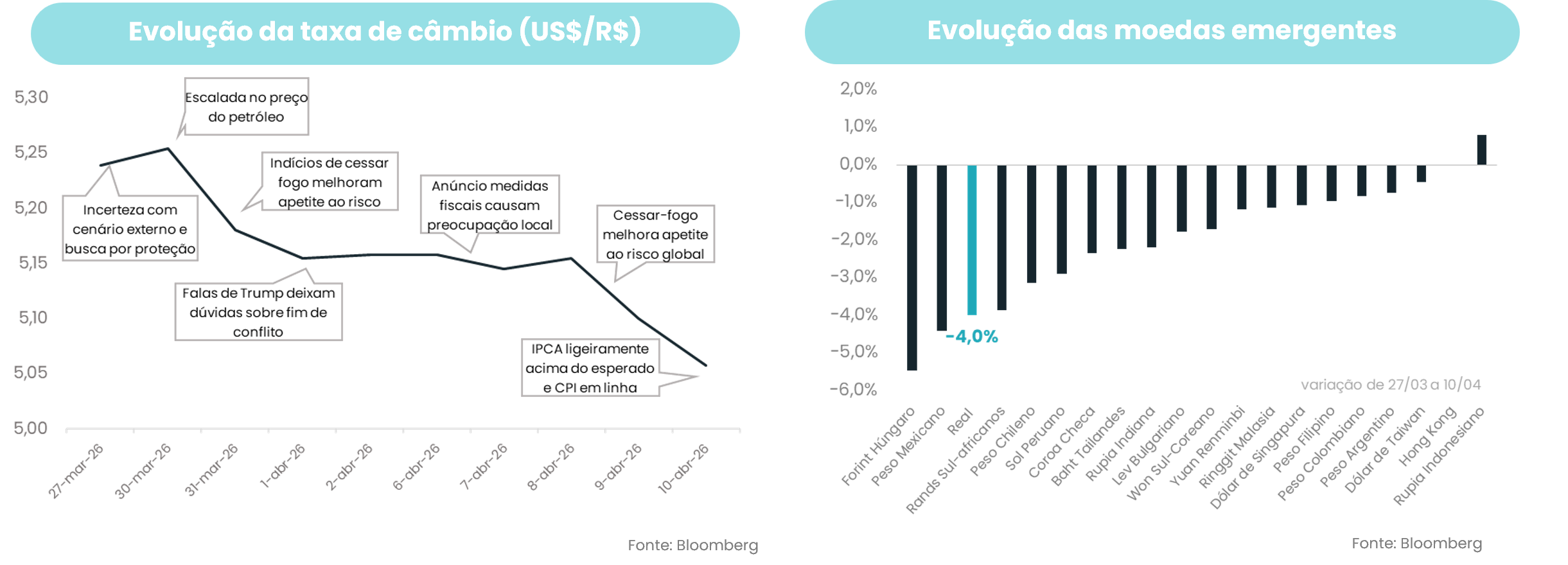
Throughout the week, the real appreciated, with the exchange rate returning to levels near R$5.05/US$. Even so, the Brazilian currency's performance was slightly weaker than that of some emerging market peers. This is partly explained by the drop in oil prices following signs of a ceasefire between the United States and Iran, which reduces the additional support the commodity had been providing to currencies of exporting countries like Brazil. Furthermore, despite the initial improvement in global risk appetite as negotiations progressed, the market remains skeptical about the sustainability of this ceasefire, maintaining a cautious bias. On the other hand, the high interest rate differential continues to favor the real through carry trade flows. In the short term, the exchange rate is expected to continue reacting to oil dynamics and geopolitical news, with a tendency toward volatility.
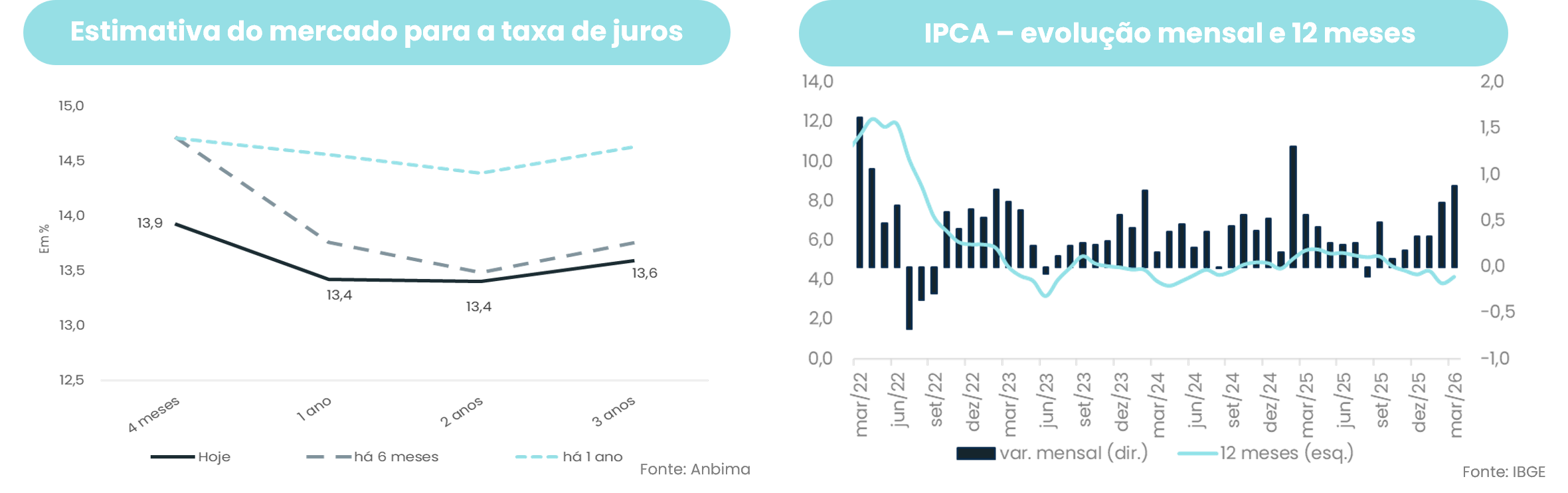
In the interest rate market, the yield curve showed relatively contained movements throughout the week, with a decline in longer tenors but no significant structural changes. The environment remains conditioned by a combination of external uncertainties and domestic inflationary dynamics, which remain resilient. Expectations for the Selic rate remain high, with the market projecting levels near 12.50% by the end of this year. In this context, the March IPCA result, which came in slightly above expectations but with a still positive breakdown, reinforces the perception of persistent inflation and supports the view that the Central Bank should maintain a more cautious stance at the next Copom meeting.
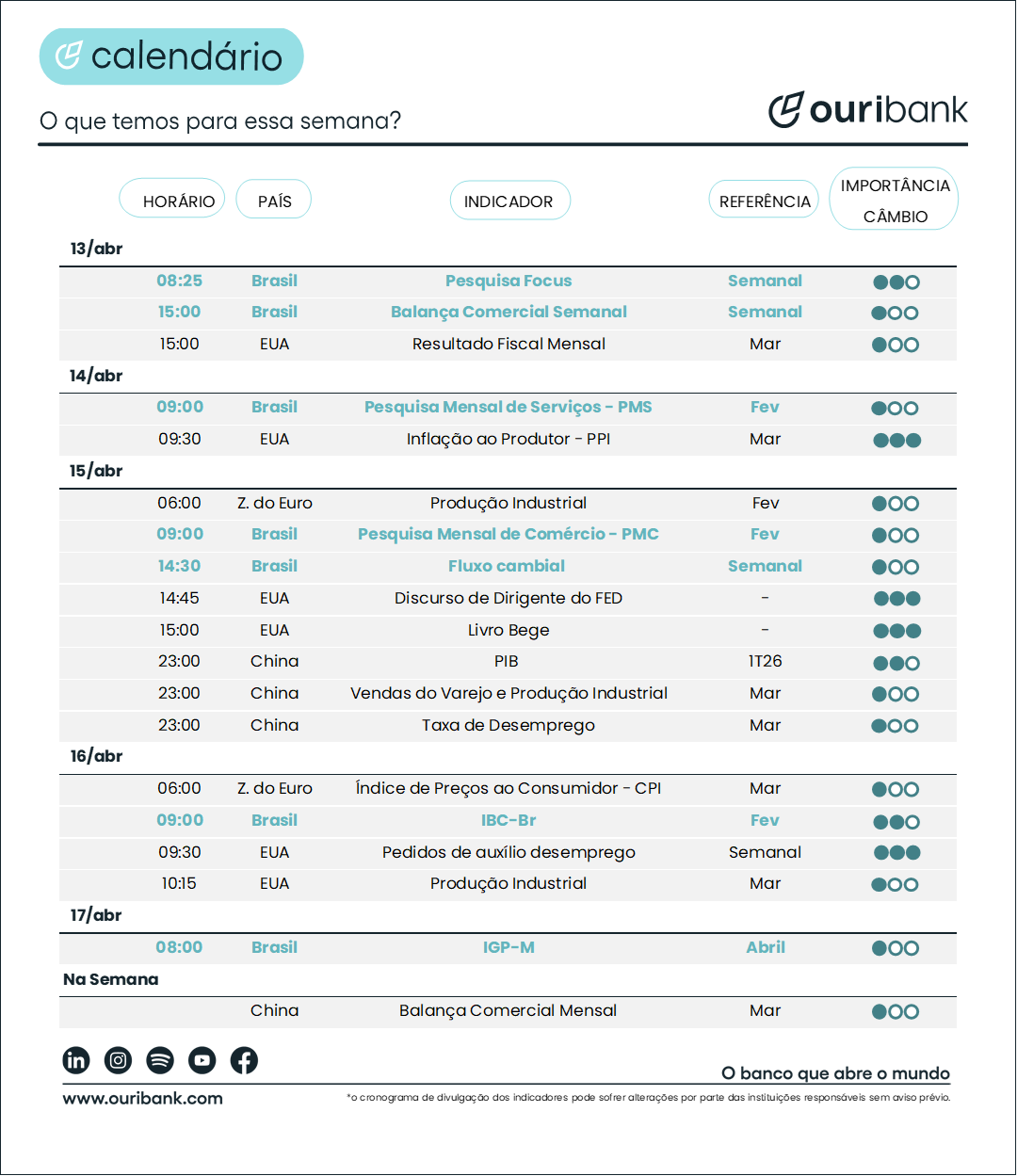

A summary of the main events of each day that may influence the exchange rate, all in less than 1 minute.
Listen nowThe Ouribank Group does not offer loans, credit or debit cards, and does not request or take responsibility for payments of bank slips or deposits into current accounts held by beneficiaries other than Ouribank S.A. Banco Múltiplo and Ouribank Group companies.
Be alert to any unusual practices for credit approval, such as advance payments. Be suspicious of emails that do not come from Ouribank, for example: @outlook, @gmail, @hotmail, etc., or messages via WhatsApp, Facebook, Instagram, and Telegram, or calls from third parties.
If you have any questions, please contact us at: 0800-771-4342 or (11) 4081-4444


Ouribank
CNPJ No. 78,632,767/0001-20 Ouribank Building
Av. Paulista, No. 1,728 - overstore, 1st, 2nd, 3rd, 4th, 5th, 7th and 11th floors
Bela Vista Zip Code - 01310-919
São Paulo - SP
Phone: (11) 4081-4444
Hearing Impaired Care:
(11) 3171-3003
P
Tamer Comunicação Empresarial
+ 5511 99602-1317
Gustavo Girotto
gugirotto@tamer.com.br
Ana Carolina Saito ana.saito@tamer.com.br

Social Media




















.png)




































.png)
.png)

.png)
.png)
.png)
.png)
.png)
.png)
.png)
.png)
.png)
.png)
.png)
.png)
.webp)
.webp)
.webp)
.webp)
.webp)
.webp)
.webp)
.webp)
.webp)
.webp)

