

About us

Solutions
Products
Content


Por
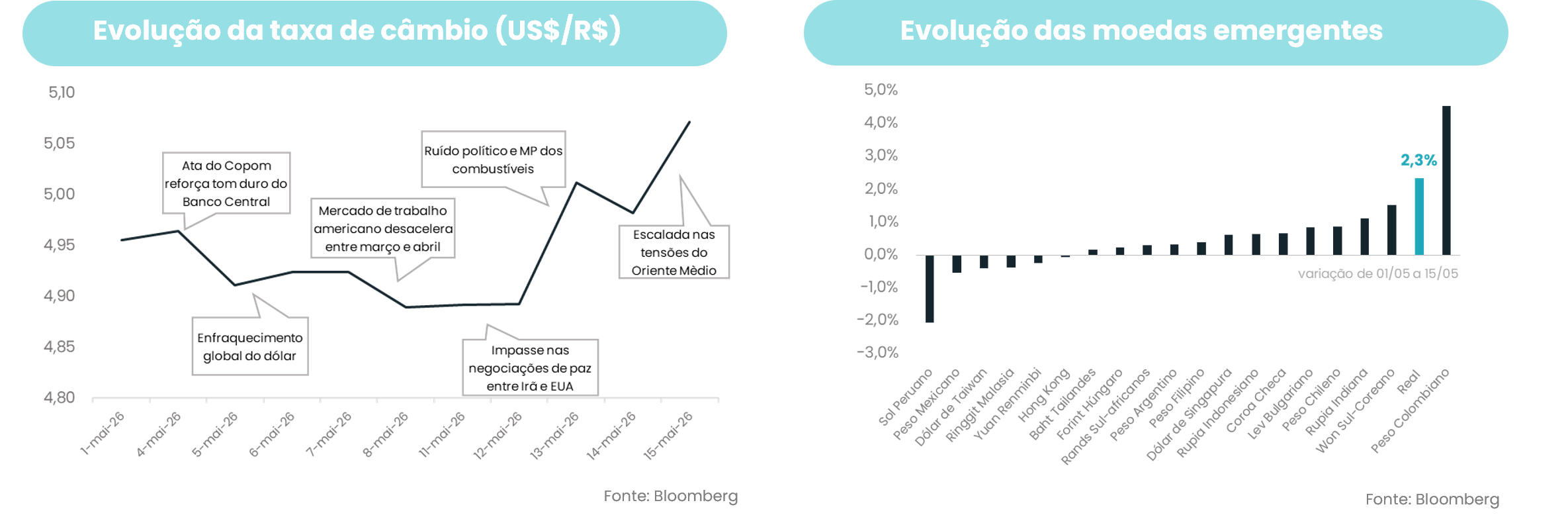
The week was marked by exchange rate volatility, with the dollar hovering around R$ 5.00. The U.S. currency even surpassed this level on Wednesday, pressured by three simultaneous factors: domestic political noise following the leaked audio involving Flávio Bolsonaro and the owner of Banco Master; a worsening fiscal outlook due to the Provisional Measure subsidizing gasoline using extraordinary revenues from Petrobras; and the external environment, with Kevin Warsh taking office at the Fed and his heterodox speech aligned with the Trump administration. Despite the resilience shown early in the week—supported by the high interest rate differential, a still-robust trade surplus, and foreign inflows—the real did not escape the generalized pressure on emerging market currencies by the end of the period, as the escalation of the conflict in the Middle East weighed on global risk appetite, leaving it as one of the worst-performing emerging market currencies.
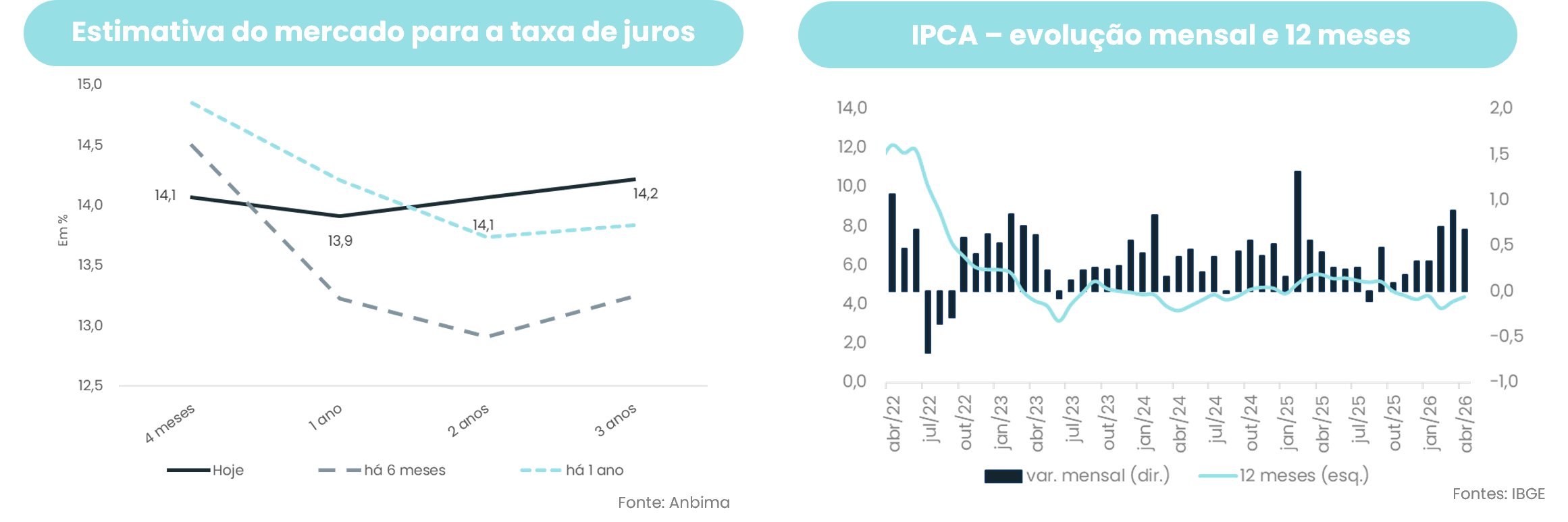
The yield curve saw an upward shift during the week, pressured by a combination of domestic political noise, deteriorating fiscal perception due to the fuel Provisional Measure, and external uncertainties surrounding the confirmation hearing of the new Fed chair in the U.S. The April IPCA, released during the week, came in line with expectations—but with a qualitative deterioration, highlighted by accelerating fuel and food prices, which reinforced the view of a central bank with no room to accelerate the pace of its rate-cutting cycle. Consequently, market bets consolidated around a higher terminal Selic rate than previously expected, contributing to keeping long-term interest rates under pressure throughout the week.
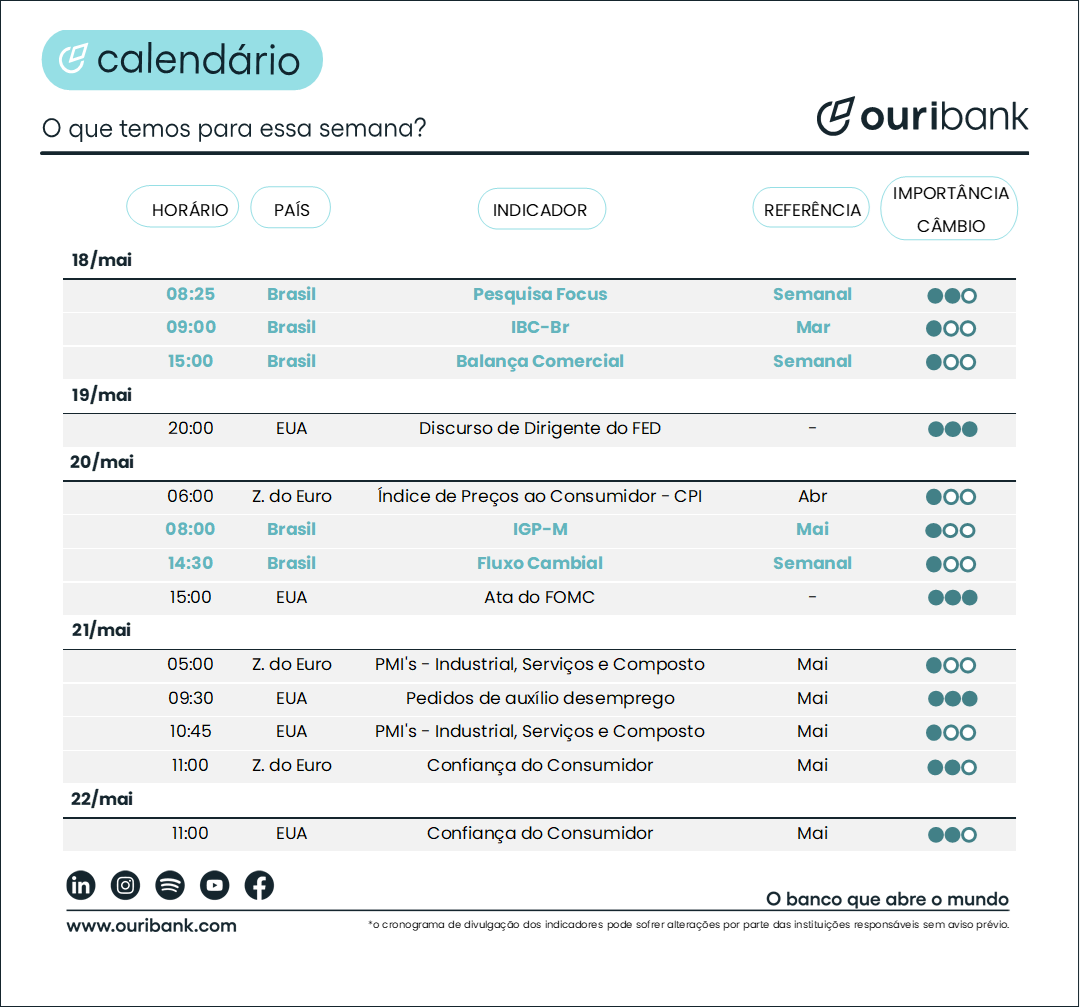

A summary of the main events of each day that may influence the exchange rate, all in less than 1 minute.
Listen nowThe Ouribank Group does not offer loans, credit or debit cards, and does not request or take responsibility for payments of bank slips or deposits into current accounts held by beneficiaries other than Ouribank S.A. Banco Múltiplo and Ouribank Group companies.
Be alert to any unusual practices for credit approval, such as advance payments. Be suspicious of emails that do not come from Ouribank, for example: @outlook, @gmail, @hotmail, etc., or messages via WhatsApp, Facebook, Instagram, and Telegram, or calls from third parties.
If you have any questions, please contact us at: 0800-771-4342 or (11) 4081-4444


Ouribank
CNPJ No. 78,632,767/0001-20
Ouribank Building
Av. Paulista, No. 1,728 - overstore, 1st, 2nd, 3rd, 4th, 5th, 7th and 11th floors
Bela Vista Zip Code - 01310-919
São Paulo - SP
Phone: (11) 4081-4444
Hearing Impaired Care:
(11) 3171-3003
P
Tamer Comunicação Empresarial
+ 5511 99602-1317
Gustavo Girotto
gugirotto@tamer.com.br
Ana Carolina Saito ana.saito@tamer.com.br

Social Media















.png)


































.png)
.png)

.png)
.png)
.png)
.png)
.png)
.png)
.png)
.png)
.png)
.png)
.png)
.png)
.webp)
.webp)
.webp)
.webp)
.webp)
.webp)
.webp)
.webp)
.webp)
.webp)

