

About us

Solutions
Products
Content
.png)

Por
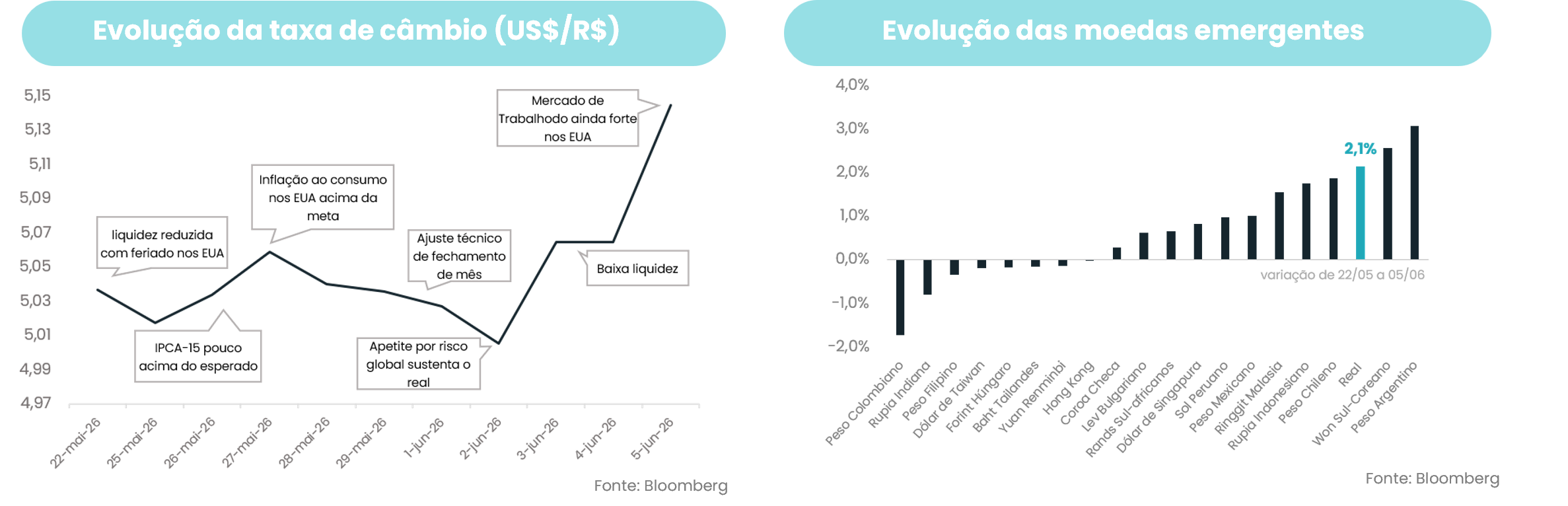
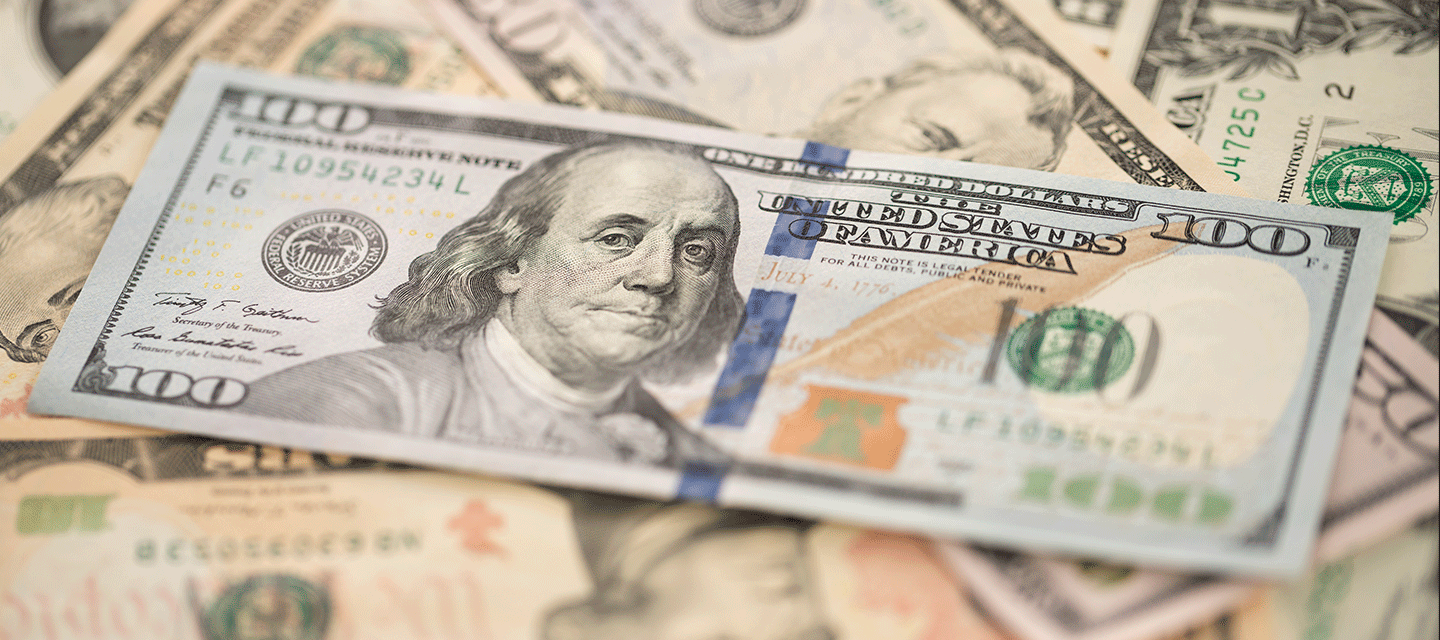
The week was marked by pressure on the exchange rate, with the dollar closing near R$ 5.14 — and the reasons came primarily from abroad. The U.S. May payroll report, which came in well above expectations, dashed hopes for interest rate cuts by the Fed and put pressure on emerging market currencies in general, including the real. Before that, the announcement of a potential 25% U.S. tariff on Brazilian products had already soured market sentiment, not so much due to the direct impact on exports, which are full of exceptions, but because of the effect on capital flows and foreign investor confidence. On the domestic front, there was no shortage of good news: the May trade balance surprised with a US$ 7.8 billion surplus (up more than 10.8% compared to the same period in 2025), driven by agriculture and manufacturing. The positive domestic figures took a backseat this time, as external factors spoke louder.
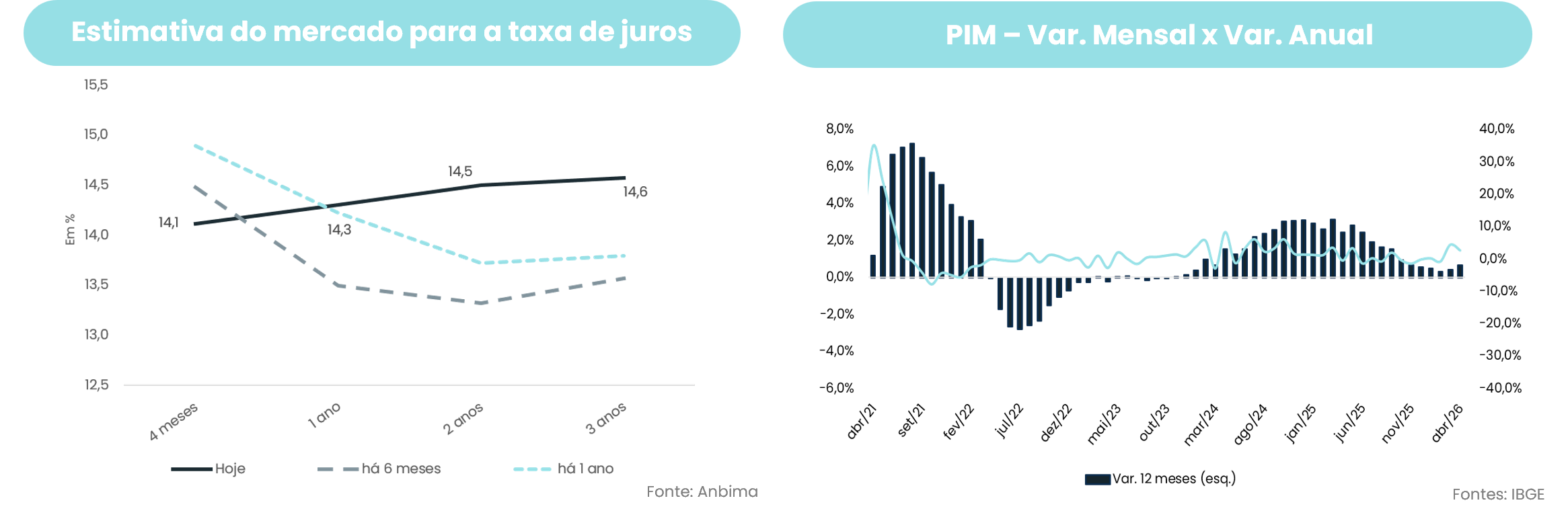
In the interest rate curve, the week required extra attention — and the numbers tell the story. The Focus Report showed the IPCA projection for 2026 rising for the 12th consecutive week, reaching 5.09%, well above the target ceiling, with the terminal Selic rate held at 13.25%. In practice, the market sees no room for cuts beyond those already priced in. Regarding activity, the Monthly Industrial Survey (PIM) for April showed the fourth consecutive gain for general industry, driven by the extractive sector — but manufacturing continues to move slowly, still feeling the weight of interest rates on those who depend on credit to operate. This is the knot that the Copom cannot easily untie: the economy is resilient enough not to need a bailout, but the most sensitive sectors are still feeling the squeeze. Abroad, the Fed's Beige Book brought no surprises — and that alone was enough to keep pressure on the longer end of the local curve.
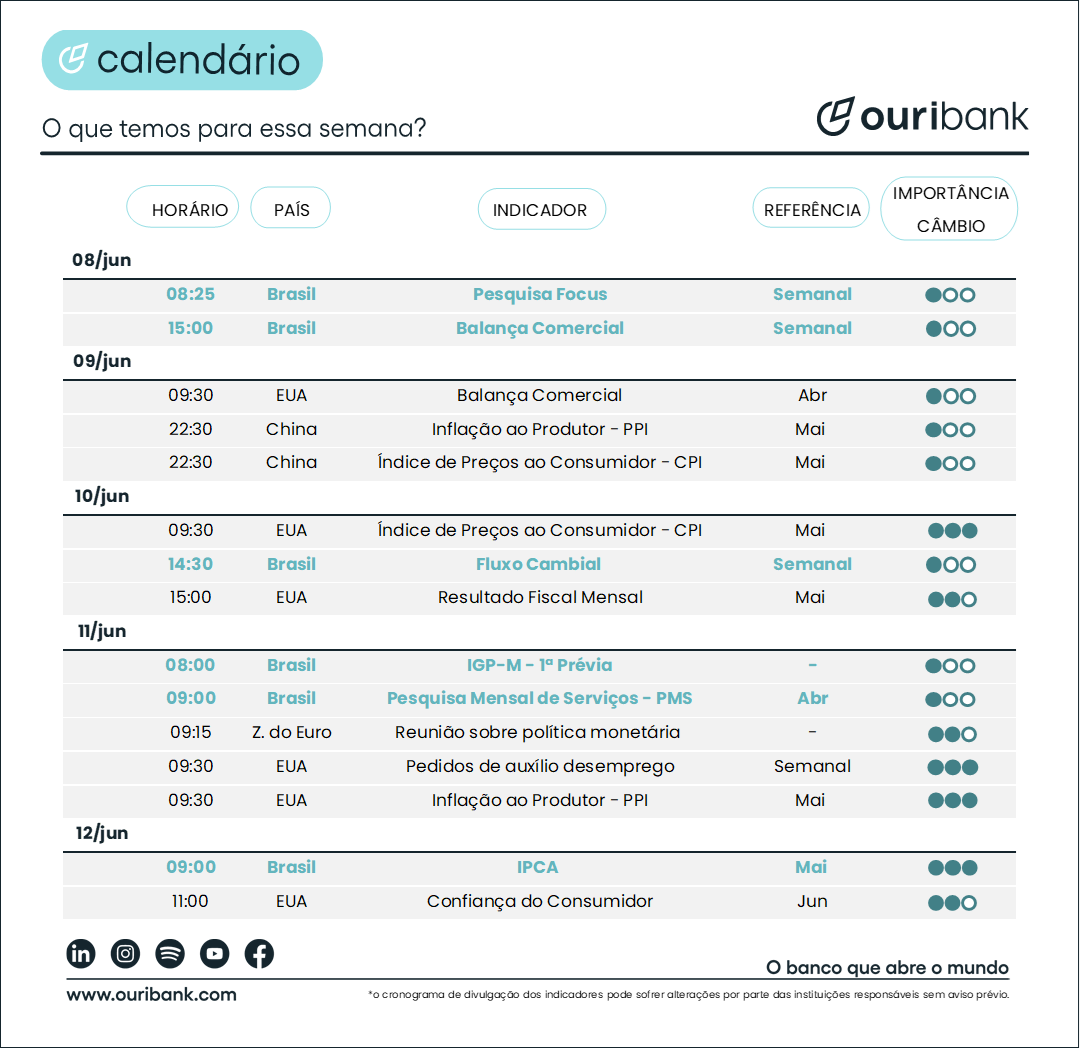

A summary of the main events of each day that may influence the exchange rate, all in less than 1 minute.
Listen nowThe Ouribank Group does not offer loans, credit or debit cards, and does not request or take responsibility for payments of bank slips or deposits into current accounts held by beneficiaries other than Ouribank S.A. Banco Múltiplo and Ouribank Group companies.
Be alert to any unusual practices for credit approval, such as advance payments. Be suspicious of emails that do not come from Ouribank, for example: @outlook, @gmail, @hotmail, etc., or messages via WhatsApp, Facebook, Instagram, and Telegram, or calls from third parties.
If you have any questions, please contact us at: 0800-771-4342 or (11) 4081-4444


Ouribank
CNPJ No. 78,632,767/0001-20 Ouribank Building
Av. Paulista, No. 1,728 - overstore, 1st, 2nd, 3rd, 4th, 5th, 7th and 11th floors
Bela Vista Zip Code - 01310-919
São Paulo - SP
Phone: (11) 4081-4444
Hearing Impaired Care:
(11) 3171-3003
P
Tamer Comunicação Empresarial
+ 5511 99602-1317
Gustavo Girotto
gugirotto@tamer.com.br
Ana Carolina Saito ana.saito@tamer.com.br

Social Media
























































.png)
.png)

.png)
.png)
.png)
.png)
.png)
.png)
.png)
.png)
.png)
.png)
.png)
.png)
.webp)
.webp)
.webp)
.webp)
.webp)
.webp)
.webp)
.webp)
.webp)
.webp)

