

About us

Solutions
Products
Content


Por
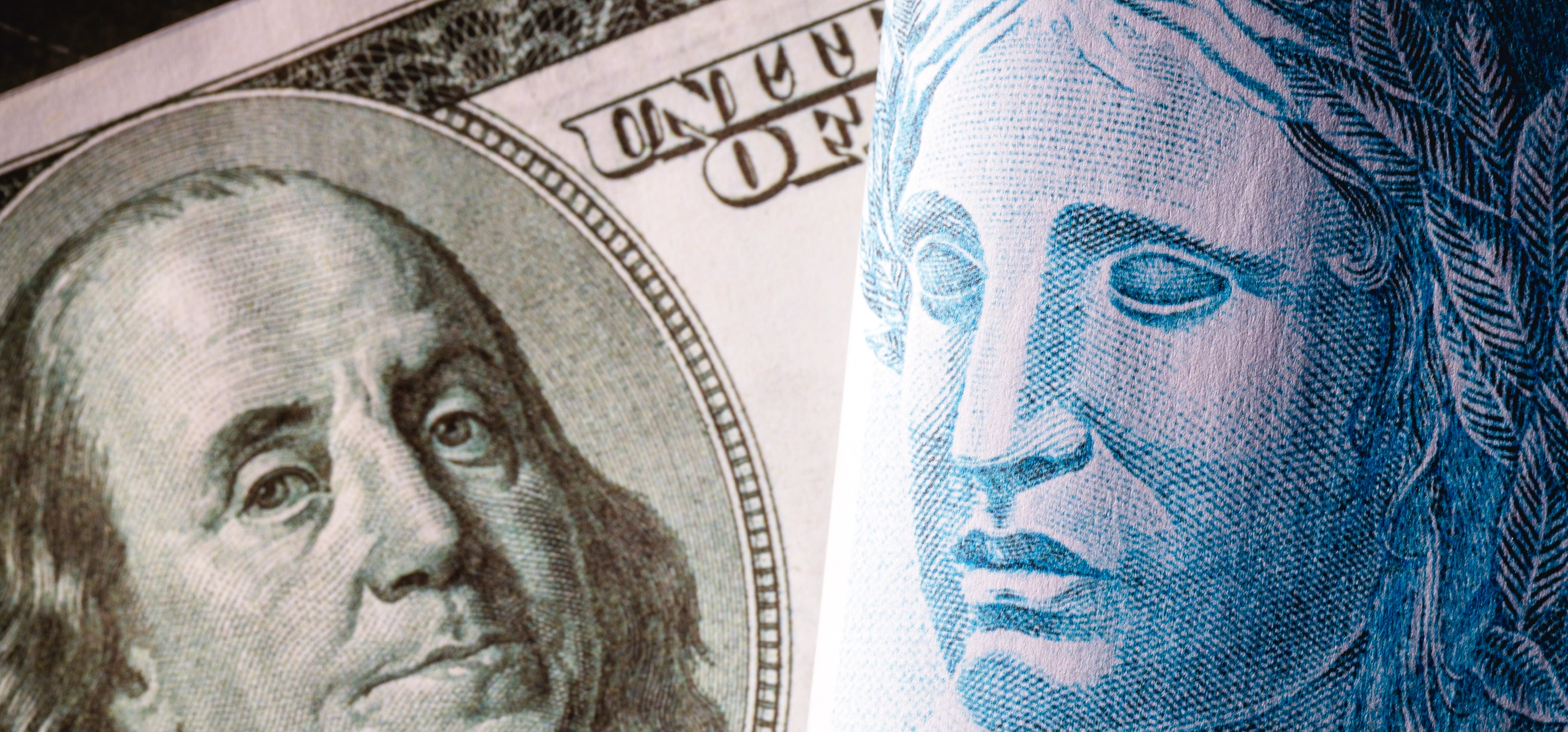
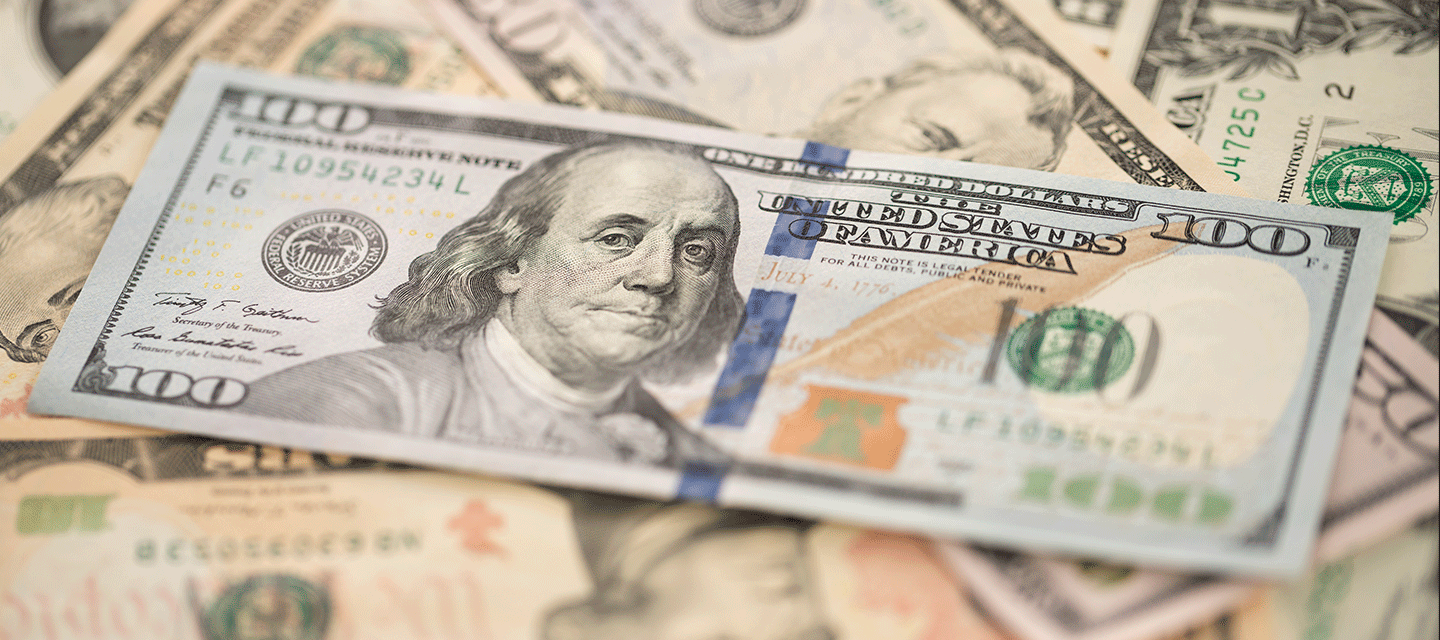
We have had another week marked by volatility in the Brazilian financial market, with the exchange rate showing an upward trend, primarily reflecting a more adverse external environment. The escalation of the war in the Middle East has heightened risk aversion and boosted the dollar as a safe-haven asset, while the sharp rise in oil prices—which surpassed $100 per barrel—has reinforced global inflationary concerns. In this context, emerging market currencies, such as the real, have come under greater pressure. However, our exchange rate has depreciated less than others due to our still highly attractive interest rate differential and the fact that we are net oil exporters—two factors that ensure a certain level of capital flow into Brazil.
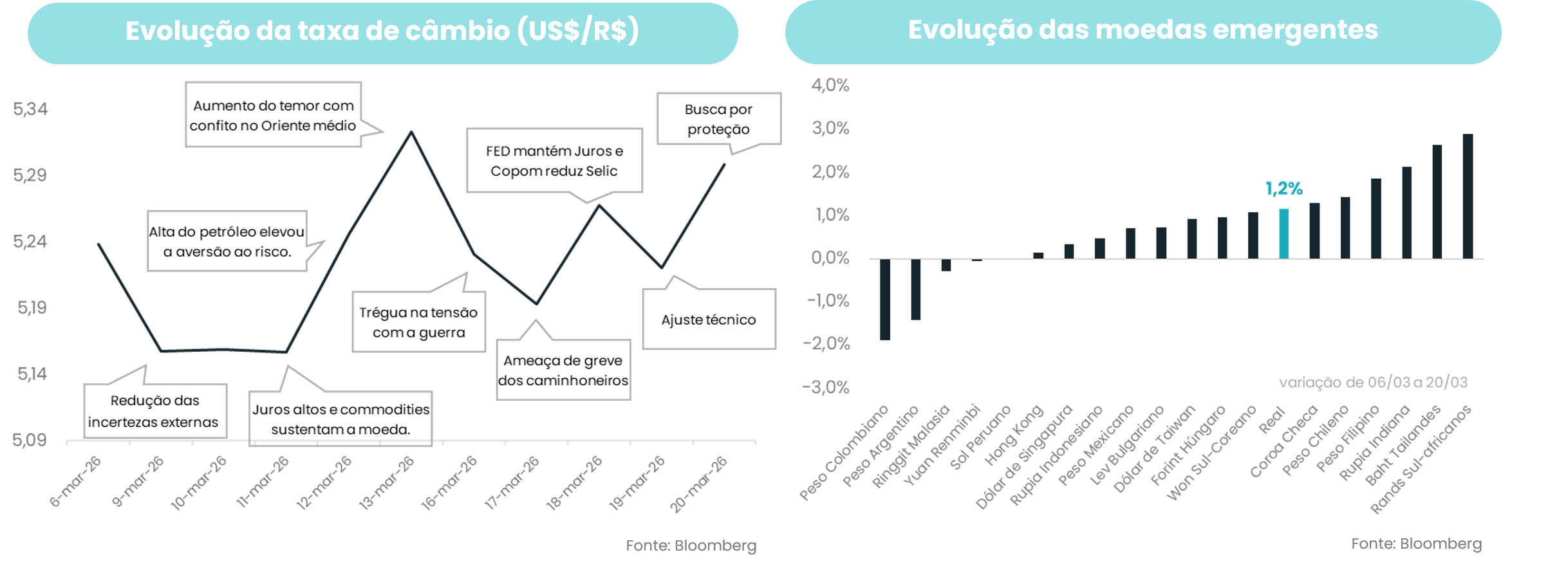
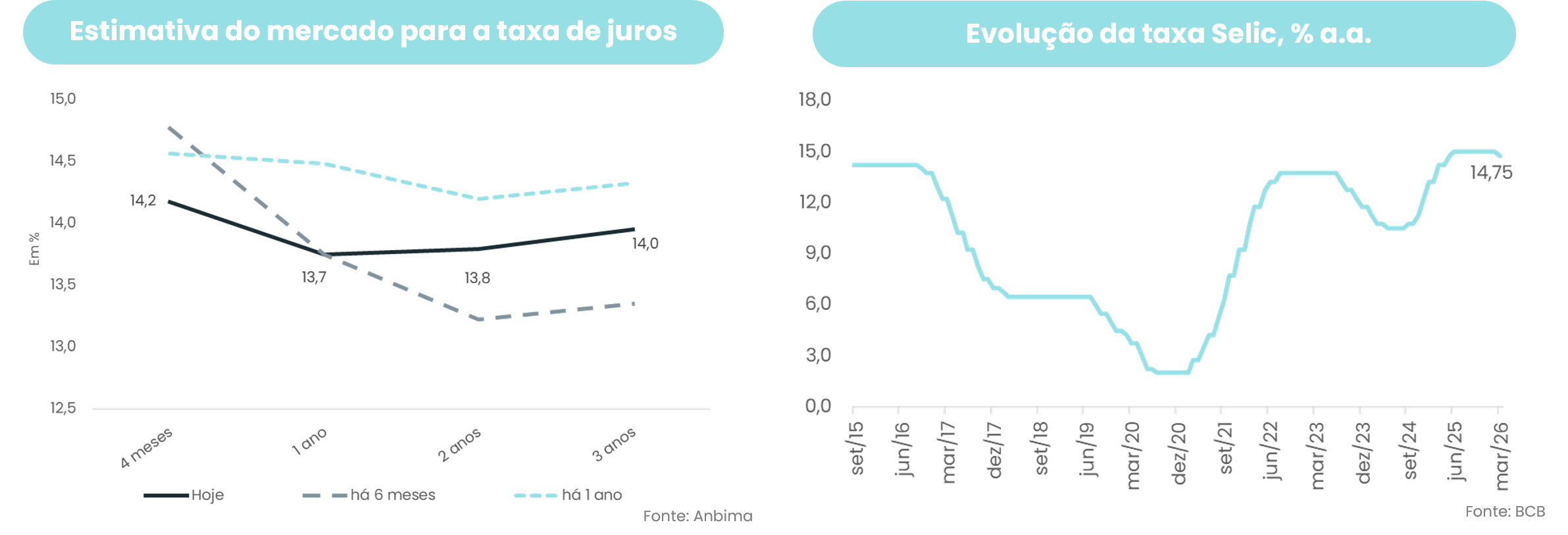
Throughout the week, the Brazilian yield curve saw a "steepening," a financial market term meaning that expectations for higher future interest rates or increased risk have risen, largely due to the worsening external scenario. Furthermore, the Copom's decision to begin its easing cycle with a more moderate 0.25 percentage point cut, bringing the Selic rate to 14.75%, accompanied by a cautious tone regarding uncertainties—mainly due to rising oil prices—contributed to this movement. Abroad, the Fed opted to hold rates steady and signaled caution regarding the return of cuts, reinforcing the perception of "higher for longer" interest rates there, which was yet another factor that put pressure on the yield curve this week.
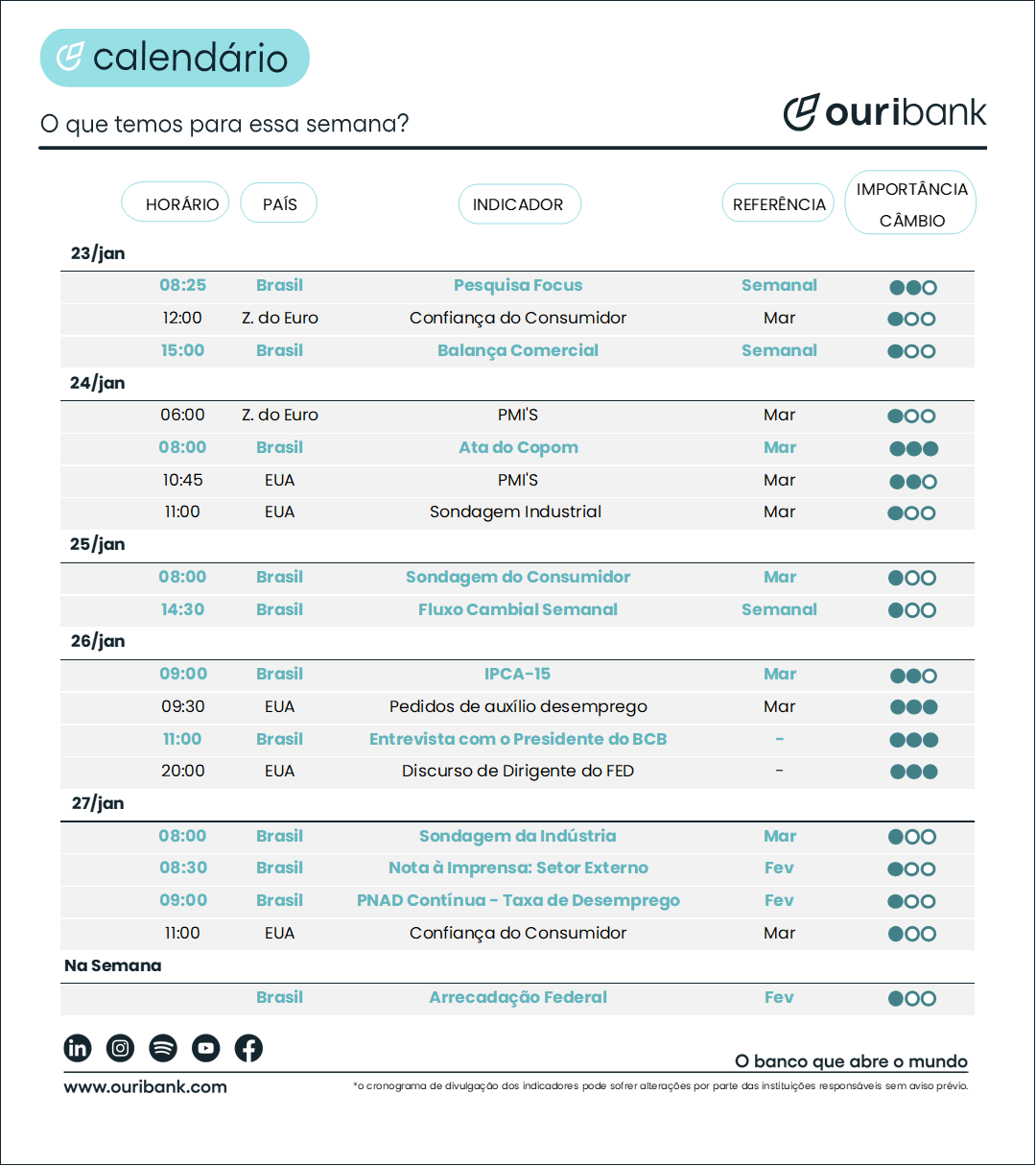

A summary of the main events of each day that may influence the exchange rate, all in less than 1 minute.
Listen nowThe Ouribank Group does not offer loans, credit or debit cards, and does not request or take responsibility for payments of bank slips or deposits into current accounts held by beneficiaries other than Ouribank S.A. Banco Múltiplo and Ouribank Group companies.
Be alert to any unusual practices for credit approval, such as advance payments. Be suspicious of emails that do not come from Ouribank, for example: @outlook, @gmail, @hotmail, etc., or messages via WhatsApp, Facebook, Instagram, and Telegram, or calls from third parties.
If you have any questions, please contact us at: 0800-771-4342 or (11) 4081-4444


Ouribank
CNPJ No. 78,632,767/0001-20
Ouribank Building
Av. Paulista, No. 1,728 - overstore, 1st, 2nd, 3rd, 4th, 5th, 7th and 11th floors
Bela Vista Zip Code - 01310-919
São Paulo - SP
Phone: (11) 4081-4444
Hearing Impaired Care:
(11) 3171-3003
P
Tamer Comunicação Empresarial
+ 5511 99602-1317
Gustavo Girotto
gugirotto@tamer.com.br
Ana Carolina Saito ana.saito@tamer.com.br

Social Media














.png)


































.png)
.png)

.png)
.png)
.png)
.png)
.png)
.png)
.png)
.png)
.png)
.png)
.png)
.png)
.webp)
.webp)
.webp)
.webp)
.webp)
.webp)
.webp)
.webp)
.webp)
.webp)

