

About us

Solutions
Products
Content


Por
The Brazilian financial market was once again influenced by the external environment this week. U.S. labor market data continued to show a resilient economy, reinforcing the perception that interest rates will remain higher for longer. This environment favored the global appreciation of the dollar and reduced the appetite for assets in emerging markets. Domestically, although activity and employment indicators continue to point to a heated economy, concerns regarding the fiscal outlook and increased political uncertainty have returned to investors' radar. As a result, the dollar gained strength against the real, ending the week above R$5.10, while the Ibovespa showed increased volatility. The combination of a stronger dollar abroad and a higher risk premium in the domestic market ended up putting pressure on Brazilian assets, particularly the exchange rate.
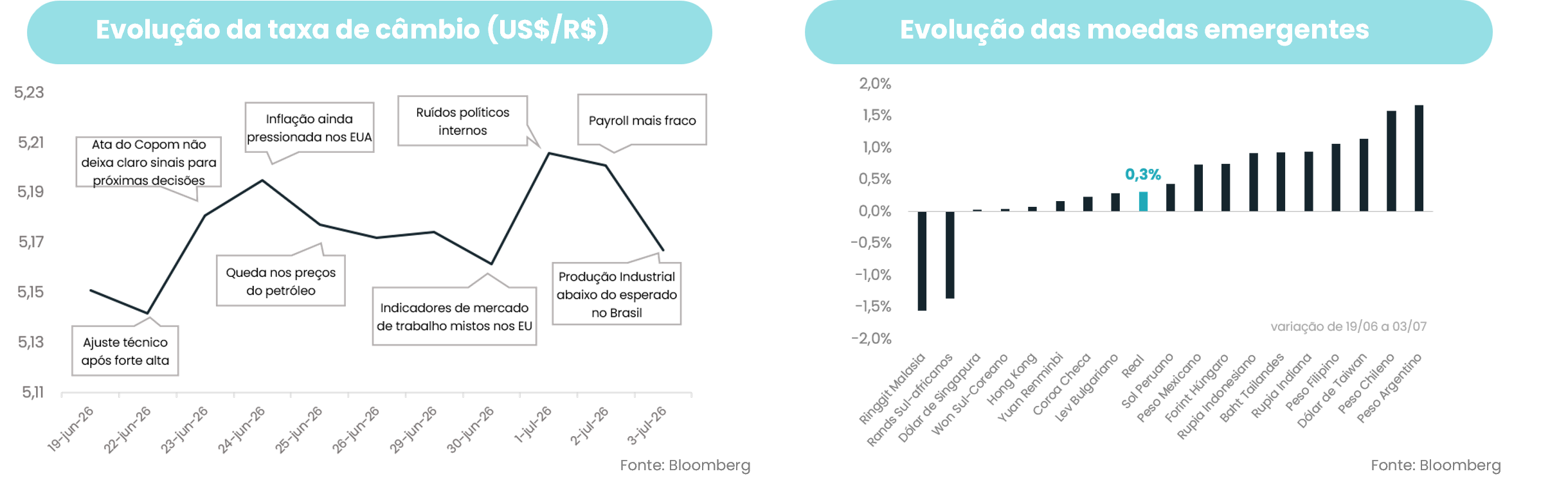
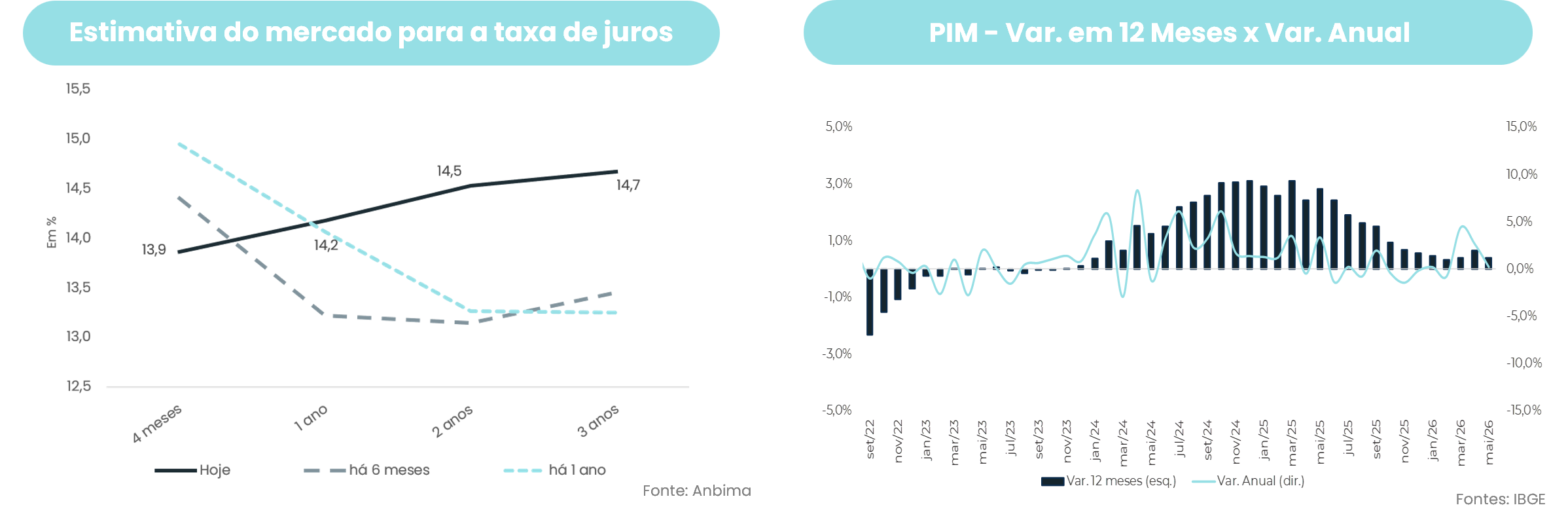
The yield curve followed the same trend and showed volatility throughout the week, reflecting the combination of a more challenging external scenario and rising domestic uncertainties. Economic activity indicators released throughout the week continued to show some resilience in our economy. Consequently, long-term interest rates remained under pressure, reflecting a more cautious stance from investors regarding the economic outlook for the coming years. Concerns about inflation, the balance of public accounts, and the political environment led the market to demand higher returns for investing in these maturities.
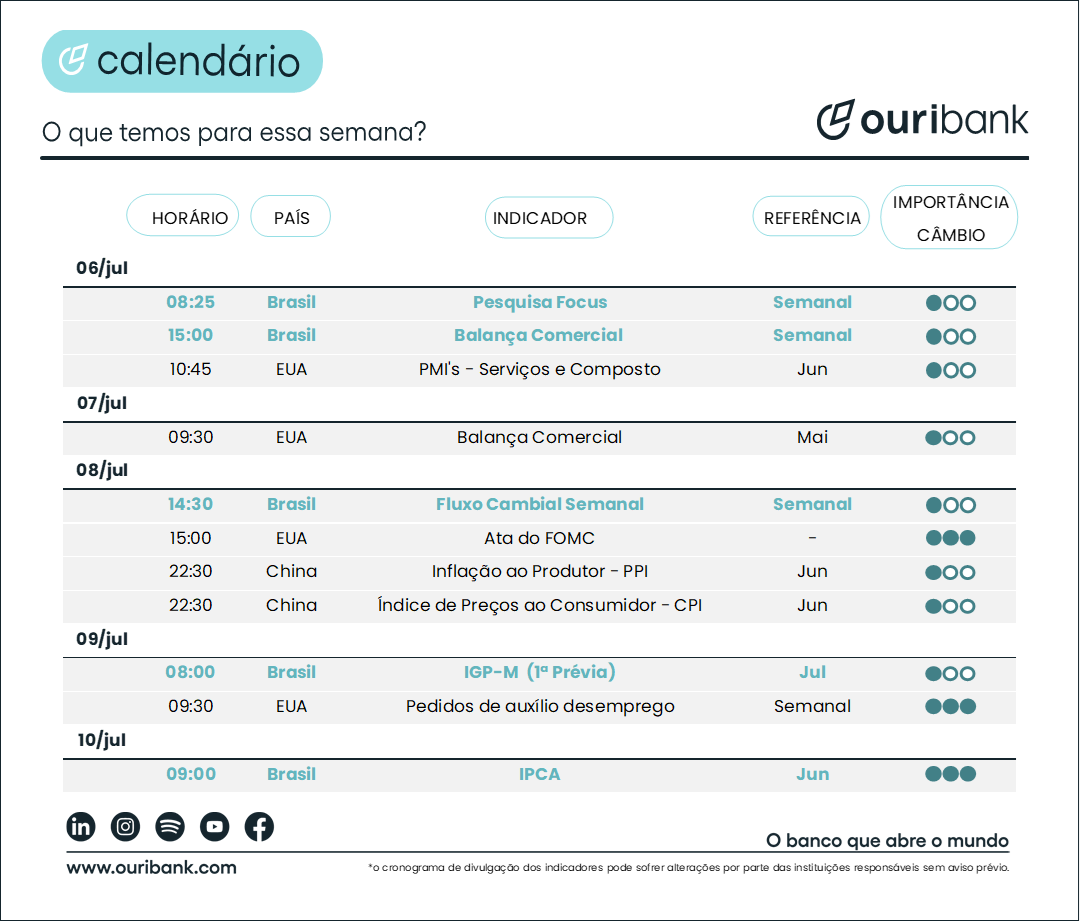

A summary of the main events of each day that may influence the exchange rate, all in less than 1 minute.
Listen nowThe Ouribank Group does not offer loans, credit or debit cards, and does not request or take responsibility for payments of bank slips or deposits into current accounts held by beneficiaries other than Ouribank S.A. Banco Múltiplo and Ouribank Group companies.
Be alert to any unusual practices for credit approval, such as advance payments. Be suspicious of emails that do not come from Ouribank, for example: @outlook, @gmail, @hotmail, etc., or messages via WhatsApp, Facebook, Instagram, and Telegram, or calls from third parties.
If you have any questions, please contact us at: 0800-771-4342 or (11) 4081-4444


Ouribank
CNPJ No. 78,632,767/0001-20
Ouribank Building
Av. Paulista, No. 1,728 - overstore, 1st, 2nd, 3rd, 4th, 5th, 7th and 11th floors
Bela Vista Zip Code - 01310-919
São Paulo - SP
Phone: (11) 4081-4444
Hearing Impaired Care:
(11) 3171-3003
P
Tamer Comunicação Empresarial
+ 5511 99602-1317
Gustavo Girotto
gugirotto@tamer.com.br
Ana Carolina Saito ana.saito@tamer.com.br

Social Media


















.png)





































.png)
.png)

.png)
.png)
.png)
.png)
.png)
.png)
.png)
.png)
.png)
.png)
.png)
.png)
.webp)
.webp)
.webp)
.webp)
.webp)
.webp)
.webp)
.webp)
.webp)
.webp)

