About us

Solutions
Products
Content
.png)

Por
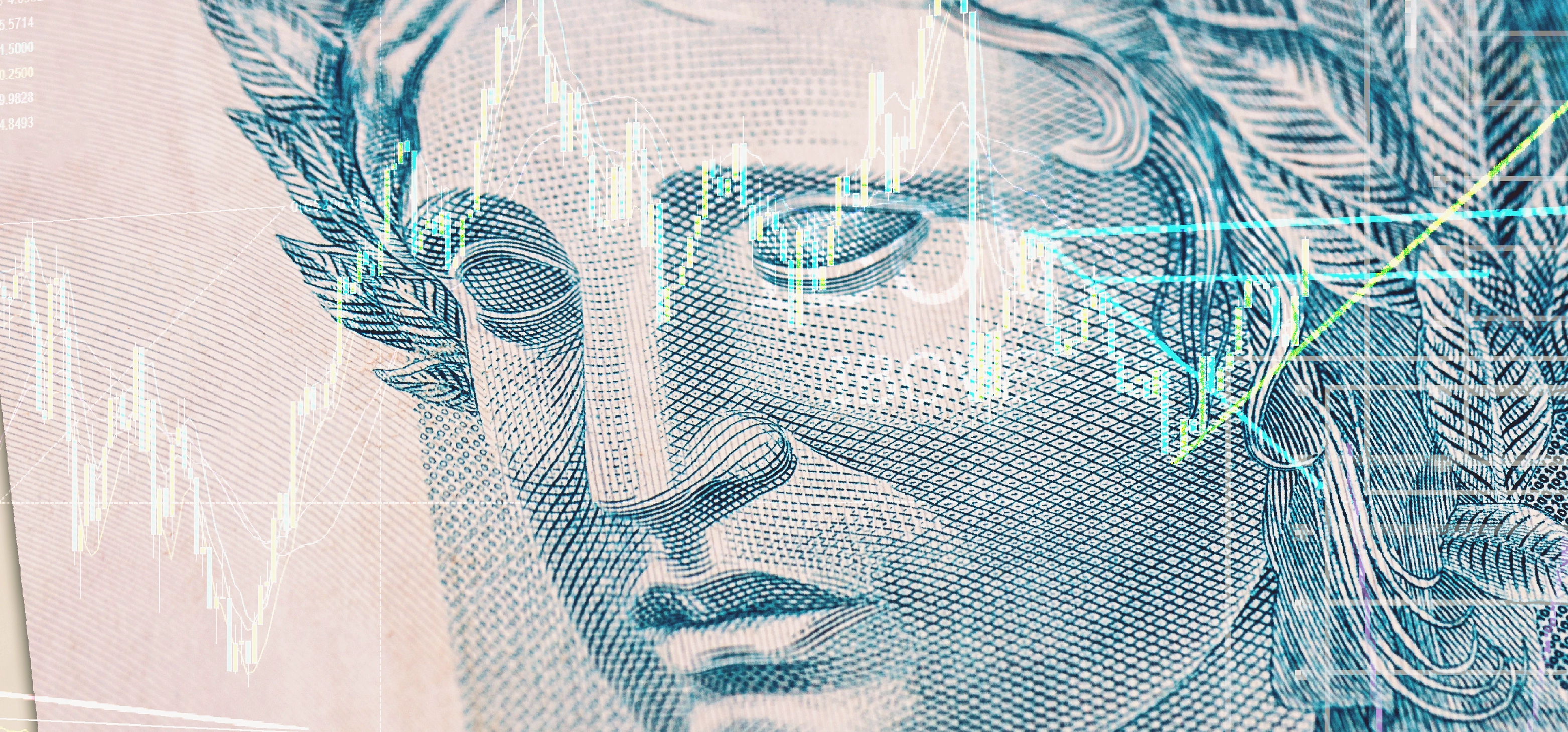
At the end of last year, the exchange rate surpassed R$6.20 per USD, reflecting global uncertainties regarding the U.S. presidential transition and the lack of clear signals of greater fiscal discipline in Brazil. This scenario created strong market pressure, with the dollar recording a significant rise. However, the beginning of this year has brought signs of relief, especially in recent weeks. Although the aforementioned risks still persist, some changes in the landscape have contributed to the appreciation of the real, among which we highlight: 1. Donald Trump's signal of seeking a rapprochement with China and 2. the National Congress recess, which temporarily reduced domestic political noise. As a result, the dollar exchange rate retreated to the R$5.90 range. The big question for us now is whether this initial relief will consolidate or if we are facing a brief pause before new turbulence. We will put forward some hypotheses over the next few paragraphs to try to unravel this mystery.
The first burning question is whether or not it is possible to draw a parallel between Trump's first term and the current administration. Remember that Trump led the U.S. economy between 2017 and 2020, with a major hurdle—or rather, a pandemic—along the way. That era was marked by significant fluctuations in major assets, especially the exchange rate, which reflected both internal and external factors. To give you an idea, at the beginning of Trump's first term, the dollar was trading near R$3.25, and by the end of the term, it was already trading at R$5.20 (already during the pandemic).
Among the main factors that influenced the behavior of the exchange rate here in Brazil during that period, we can highlight:
1. Externally: The economic policy implemented by Donald Trump during his first term was marked by significant measures that impacted both the domestic American scene and the global market. One of the main characteristics of this policy was the adoption of protectionist practices (hello, I think we'll see that again!), exemplified by the trade war with the Asian giant, China. This strategy involved imposing tariffs on various imported products, which resulted in economic tensions between the two countries and generated volatility in financial markets around the world. In addition, Trump promoted tax reforms in the United States, which included significant tax cuts for companies and individuals. These measures, intended to stimulate the domestic economy, also had the effect of strengthening the dollar in the international market, influencing global competitiveness and the dynamics of economic relations between nations.
2. Internally: The political and economic scenario faced by Brazil was marked by significant instability, with uncertainties related to structural issues, such as the pension reform, which generated prolonged debates and uncertainty regarding its approval and long-term fiscal impact. Furthermore, various fiscal crises in some states aggravated the situation, highlighting the fragility of public finances at different levels of government—with the caveat of the pandemic. Economically, the country experienced an internal crisis characterized by a slow recovery in economic growth and a high unemployment rate. These factors directly reflected on the population's quality of life and consumer market confidence—confidence indicators were severely damaged at that time. These factors, added to moments of risk aversion in the global scenario, led to the departure of foreign investors, which contributed to a decrease in available capital, increased volatility in domestic financial markets, and pressure on our exchange rate.
3. Globally: Finally, we cannot fail to mention that the 2020 pandemic intensified the devaluation of the real, with capital flight to safer currencies, such as the dollar.
In 2025, exchange rate volatility is expected to remain one of the markets' main concerns, a reflection of the uncertainties associated with the Trump administration—we are already feeling this now in January.Unlike the Republican president's first term, which was marked by sharper currency fluctuations, there are factors this time that could help moderate the impact of a significant surge in the foreign exchange rate. Among these factors, the interest rate differential favorable to Brazil stands out. With a higher Selic rate compared to the US Federal Funds rate, the country becomes more attractive to international investors, helping to curb currency depreciation. Furthermore, there is an expectation (or perhaps a hope?) that the Brazilian government will adopt a more austere fiscal stance. Recent signs point to a greater commitment to controlling public accounts, which could bolster confidence in the real and reduce pressure on the exchange rate.
Despite these theoretically more positive conditions, the landscape remains uncertain and subject to significant shifts, especially due to factors that are difficult—if not impossible—to predict. Therefore, it will be crucial to closely monitor political and economic developments in both the US and Brazil to assess how these elements will interact within the exchange rate context throughout the year. To give you an idea, exchange rate projections according to the Central Bank's Focus survey remain above current levels, at R$6.00 to the dollar for the end of this year and next. In other words, everyone is still hedging their bets regarding this scenario.
Indeed, there is still a long way to go before the end of the year, and given the start of the Trump administration, excitement is guaranteed. It remains to be seen whether the dollar's behavior here in Brazil will be penalized by the volatility typical of an old-new American administration, as it was between 2017 and 2020, or if it will benefit from the capital inflows expected due to our higher, more attractive interest rates from an investor's perspective. For now, the only certainty we have is that we have no certainty at all!

A summary of the main events of each day that may influence the exchange rate, all in less than 1 minute.
Listen nowThe Ouribank Group does not offer loans, credit or debit cards, and does not request or take responsibility for payments of bank slips or deposits into current accounts held by beneficiaries other than Ouribank S.A. Banco Múltiplo and Ouribank Group companies.
Be alert to any unusual practices for credit approval, such as advance payments. Be suspicious of emails that do not come from Ouribank, for example: @outlook, @gmail, @hotmail, etc., or messages via WhatsApp, Facebook, Instagram, and Telegram, or calls from third parties.
If you have any questions, please contact us at: 0800-771-4342 or (11) 4081-4444


Ouribank
CNPJ No. 78,632,767/0001-20 Ouribank Building
Av. Paulista, No. 1,728 - overstore, 1st, 2nd, 3rd, 4th, 5th, 7th and 11th floors
Bela Vista Zip Code - 01310-919
São Paulo - SP
Phone: (11) 4081-4444
Hearing Impaired Care:
(11) 3171-3003
P
Tamer Comunicação Empresarial
+ 5511 99602-1317
Gustavo Girotto
gugirotto@tamer.com.br
Ana Carolina Saito ana.saito@tamer.com.br

Social Media