About us

Solutions
Products
Content


Por
July is coming to an end, but there is still plenty of excitement ahead—and I’m not talking about soccer, that’s already behind us! This week, all eyes in the market are on Washington, where the Fed will decide the direction of U.S. interest rates. And this time, the scenario is far from simple.
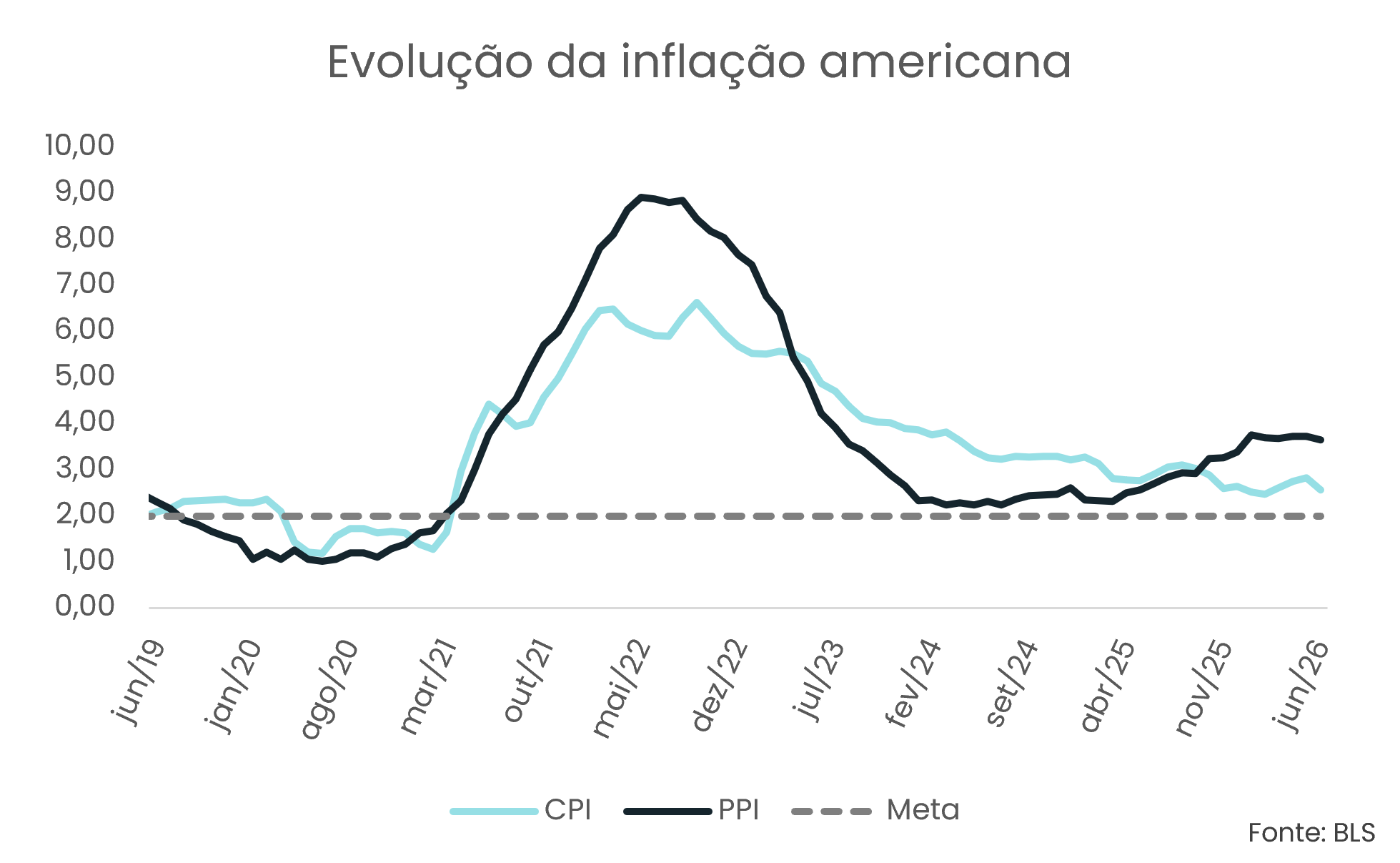
In recent months, U.S. inflation indicators have slowed down slightly, but the figure remains above the 2% target (see chart). In other words, while inflation has lost momentum compared to previous years, the Fed’s mission remains uncertain, and the path to full stability is not yet complete. To complicate matters further, old and new factors remain on the U.S. Central Bank’s radar. Oil prices have risen again due to geopolitical tensions in the Middle East, which could increase costs for transportation, energy, and production across various sectors—and if this trend persists, some of this increase is likely to reach the consumer sooner or later. Add to this the trade tariffs imposed by the United States on imported goods: depending on the intensity of their impact, they could also add to price pressures in the coming months.
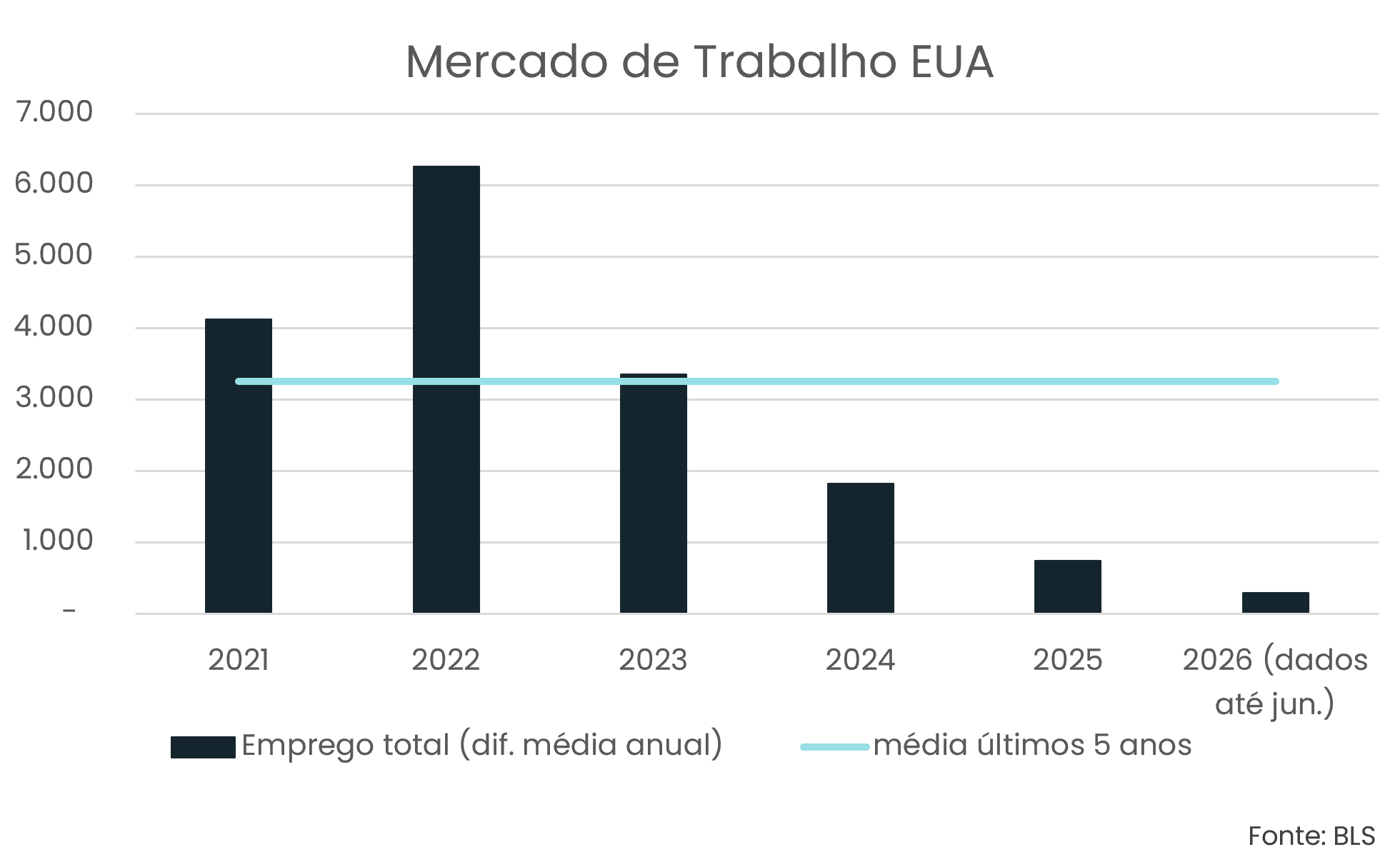
Meanwhile, the labor market remains surprisingly robust. Unemployment stays at historically low levels, and the economy continues to generate jobs, albeit at a more moderate pace than before (see chart). This shows that economic activity remains relatively heated and that households maintain their consumption capacity—which, at first glance, seems like good news. But for the Fed, this scenario may be a reason for extra caution: when employment remains strong, companies keep hiring and consumers keep spending, which helps sustain growth but can also keep inflation under pressure for longer, reducing the room for interest rate cuts in the short term. Or will it?
Given this set of signals, the consensus among economists and investors is that the Fed should keep interest rates at their current level (see chart). However, the environment has become more uncertain in recent weeks. The combination of stubborn inflation, rising oil prices, and doubts about the real impact of tariffs has led a growing number of analysts to classify this meeting as one of the most difficult in recent months. Although maintaining rates remains the most likely scenario, the official statement and the Fed Chair’s press conference will be scrutinized for any clues about the next steps in monetary policy. In practice, the decision itself may end up being the least important part: what will really move the markets is the tone of the message. A more cautious stance on inflation tends to push rate-cut bets further out, while a more confident tone regarding price behavior could reopen the door to expectations of a future monetary easing cycle.

And even though this is a decision made in another country, the effects usually reach us here—sometimes faster, sometimes not. But the fact is, we need to be prepared! When U.S. interest rates remain high, U.S. government bonds (the famous Treasuries) become more attractive to investors worldwide, which pulls some of the capital that would go to emerging markets—hello, Brazil!—toward assets considered safer—hi, USA! This movement tends to strengthen the dollar against other currencies, including the real, putting pressure on the exchange rate and making imports more expensive. For companies that rely on imported inputs or operate in foreign trade, this can mean higher costs and greater daily volatility. On the other hand, if the Fed signals that the current interest rate level is already sufficient to bring inflation back to target, the scenario reverses: the international environment tends to become more favorable for emerging markets, the real may gain strength against the dollar, and the flow of investment into Brazil is likely to increase.
In any case, the interest rate figure is only the first part of the story. What really matters comes right after: the official statement and the Fed Chair’s remarks will indicate how the institution views inflation trends, the strength of the labor market, and the risks ahead for the U.S. economy. It is this reading that shapes expectations for the coming months and directly influences financial markets around the world—and, ultimately, understanding the Fed’s message is just as important as knowing the interest rate decision itself.

A summary of the main events of each day that may influence the exchange rate, all in less than 1 minute.
Listen nowThe Ouribank Group does not offer loans, credit or debit cards, and does not request or take responsibility for payments of bank slips or deposits into current accounts held by beneficiaries other than Ouribank S.A. Banco Múltiplo and Ouribank Group companies.
Be alert to any unusual practices for credit approval, such as advance payments. Be suspicious of emails that do not come from Ouribank, for example: @outlook, @gmail, @hotmail, etc., or messages via WhatsApp, Facebook, Instagram, and Telegram, or calls from third parties.
If you have any questions, please contact us at: 0800-771-4342 or (11) 4081-4444


Ouribank
CNPJ No. 78,632,767/0001-20 Ouribank Building
Av. Paulista, No. 1,728 - overstore, 1st, 2nd, 3rd, 4th, 5th, 7th and 11th floors
Bela Vista Zip Code - 01310-919
São Paulo - SP
Phone: (11) 4081-4444
Hearing Impaired Care:
(11) 3171-3003
P
Tamer Comunicação Empresarial
+ 5511 99602-1317
Gustavo Girotto
gugirotto@tamer.com.br
Ana Carolina Saito ana.saito@tamer.com.br

Social Media