About us

Solutions
Products
Content


Por
It’s World Cup season, and it’s all anyone can think about. Yes! But let’s also talk about the economy, because it’s Ouribank Special week. Just like in the World Cup, the game plan drawn up before kickoff had to be changed mid-match. New developments forced governments, central banks, and investors to make strategic substitutions to try and keep a reasonably healthy economy on the field.
Well, if the global economy were a national soccer team, 2026 would be the tournament where the coach had to quickly abandon the strategy prepared before the opening match. The original plan called for lower interest rates, controlled inflation, and a more favorable international environment. But the match started with high stakes; new geopolitical tensions, trade tariffs, and inflationary pressures forced the economy’s key players off the field, making way for new priorities. As a result, the 2026 economic landscape has been marked by a succession of events that significantly altered the outlook established at the start of the year. The global environment has become more challenging, inflation has regained momentum in several economies, and central banks have had to revise their monetary easing strategies. Despite this context, Brazil has shown relatively positive performance, supported by favorable external fundamentals and the resilience of domestic economic activity. However, this performance also brings significant challenges, especially regarding inflation and fiscal sustainability.
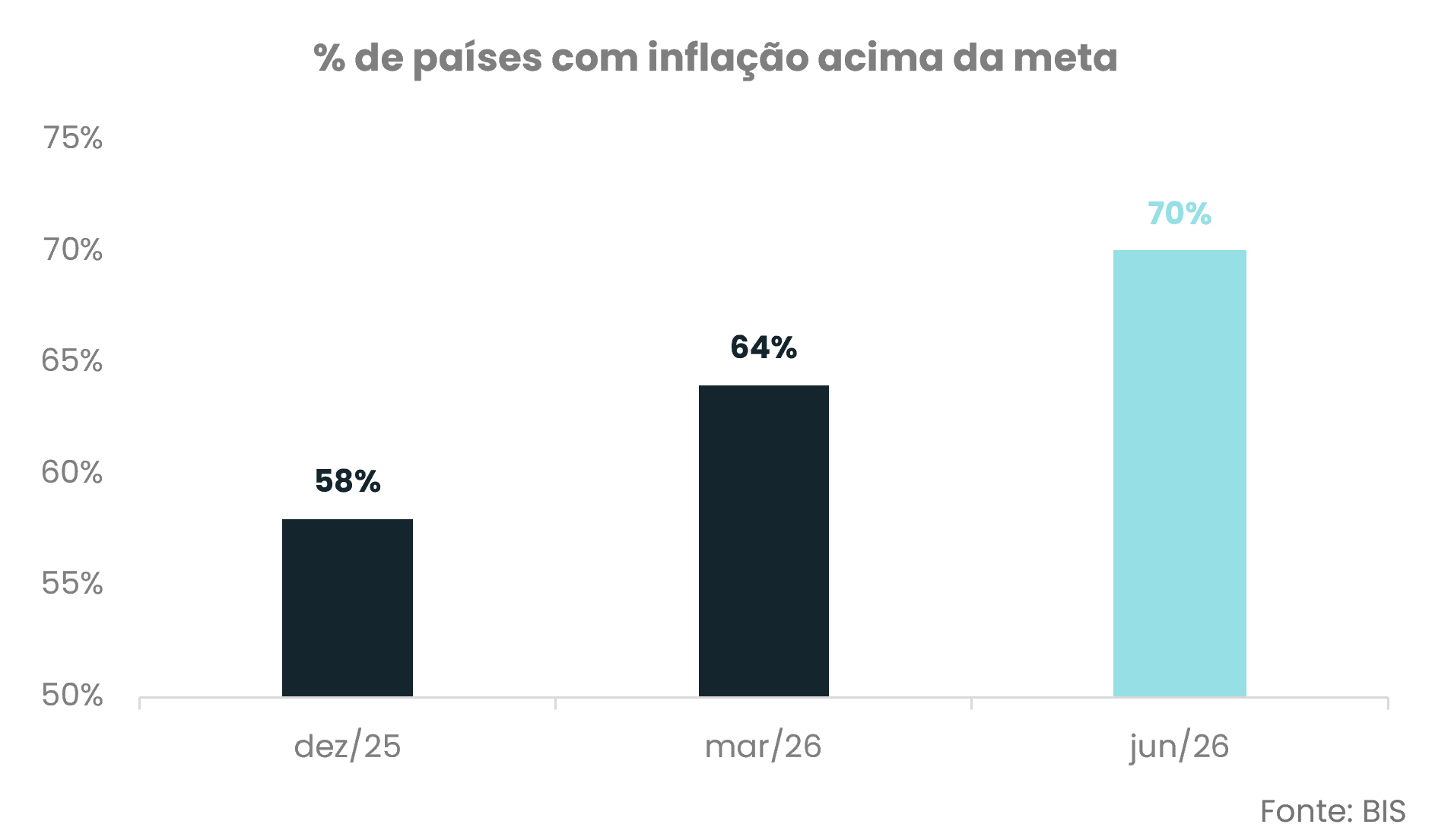
The external and geopolitical landscape and the first substitution: out goes the expectation of rapid interest rate cuts, in comes central bank caution. The international environment has deteriorated over the last few months. New trade tariffs imposed by the United States have triggered a reorganization of global supply chains and increased market uncertainty. At the same time, rising geopolitical tensions in the Middle East, especially involving Iran and the United States more recently, have boosted oil prices and amplified global inflationary pressures. Consequently, inflation expectations have risen again in several economies, forcing major central banks to adopt a more cautious stance. Among countries that follow inflation-targeting regimes, recent studies show that approximately 70% still have inflation above their central targets (see chart). The scenario that previously pointed to a continuous cycle of interest rate cuts has given way to a more conservative strategy, with slower cuts, pauses, or even the possibility of new rate hikes in some regions.
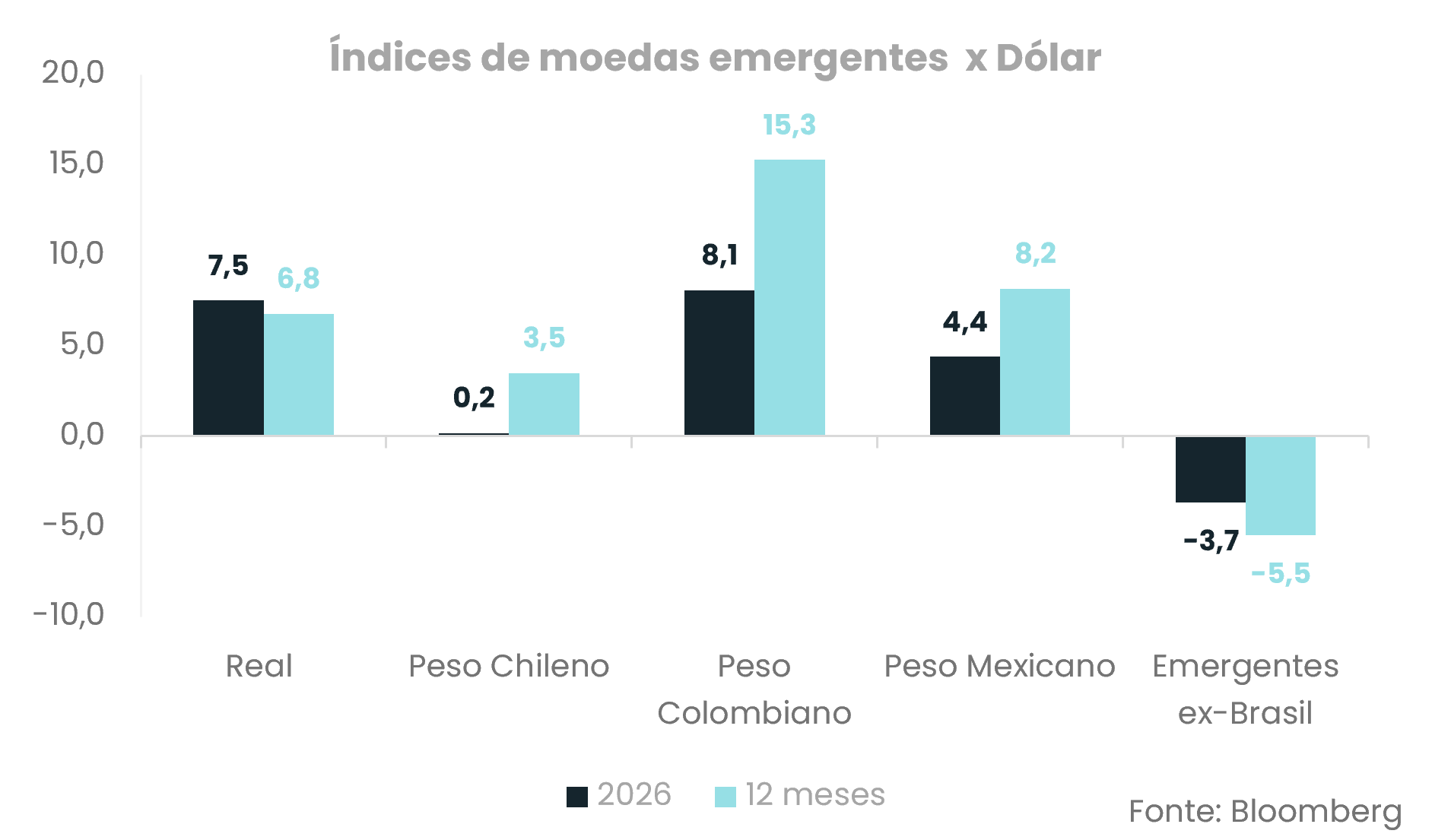
While some teams have lost their rhythm, Brazil has managed to remain competitive: despite the more complex external environment, Brazil seems to have stood out positively among emerging markets in some ways. The real, for instance, is among the best-performing currencies of the year, benefiting primarily from the high interest rate differential, its status as a net oil exporter, and the inflow of foreign capital. Furthermore, the robustness of foreign direct investment, economic diversification, and, to some extent, the abundance of natural resources help maintain a relatively favorable perception of the country among international investors. This combination of factors contributes to a more benign exchange rate dynamic (even if at a high level) and helps mitigate some of the inflationary impacts coming from abroad (see chart).
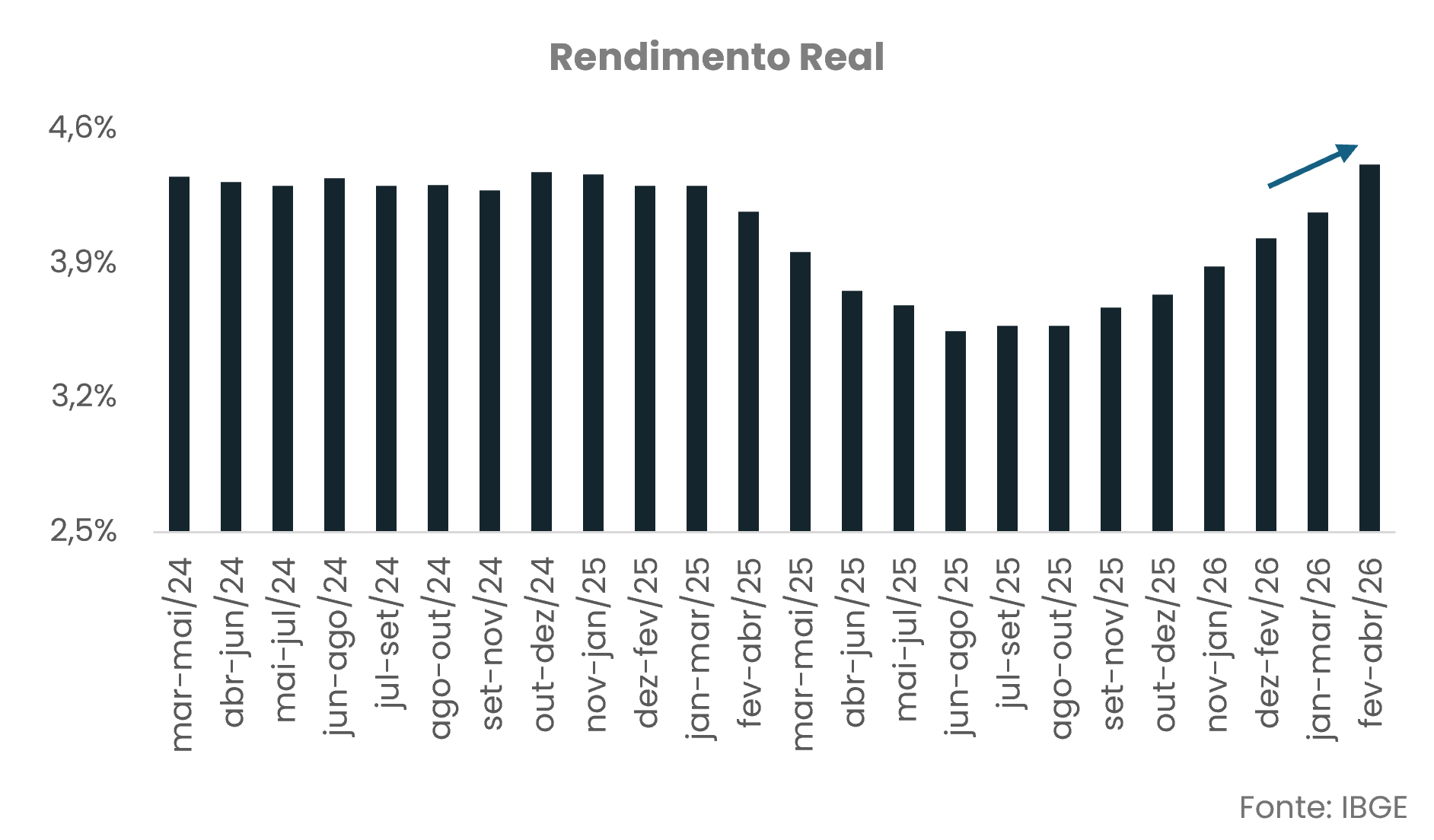
Even playing on a difficult field, the domestic economy has continued to advance: the Brazilian economy continues to show strength, even in a high-interest-rate environment. The growth observed in the first quarter was a positive surprise, accompanied by a still-hot labor market. The unemployment rate remains at historically low levels, formal job creation remains consistent, and real household income has continued to rise (see chart). Sectors such as the extractive industry, driven by oil production, and the manufacturing industry are showing a gradual recovery, while vehicle production and sales have also exceeded expectations. This set of indicators shows that the Brazilian economy has not yet fully absorbed the contractionary effects of the monetary policy implemented in recent years.
Every good campaign also has a player who came off the bench to change (or disrupt) the course of the game: A significant part of this economic resilience can be explained by the fiscal stimulus implemented by the government. Measures such as expanding the income tax exemption bracket, the growth of private payroll-deducted loans, and debt renegotiation programs increase household disposable income and support domestic consumption. In practice, these policies act as an important buffer against the effects of high interest rates, helping the economic slowdown occur more gradually. This scenario helps explain why the Brazilian economy has been growing above expectations, even in the face of one of the highest real interest rates in the world.
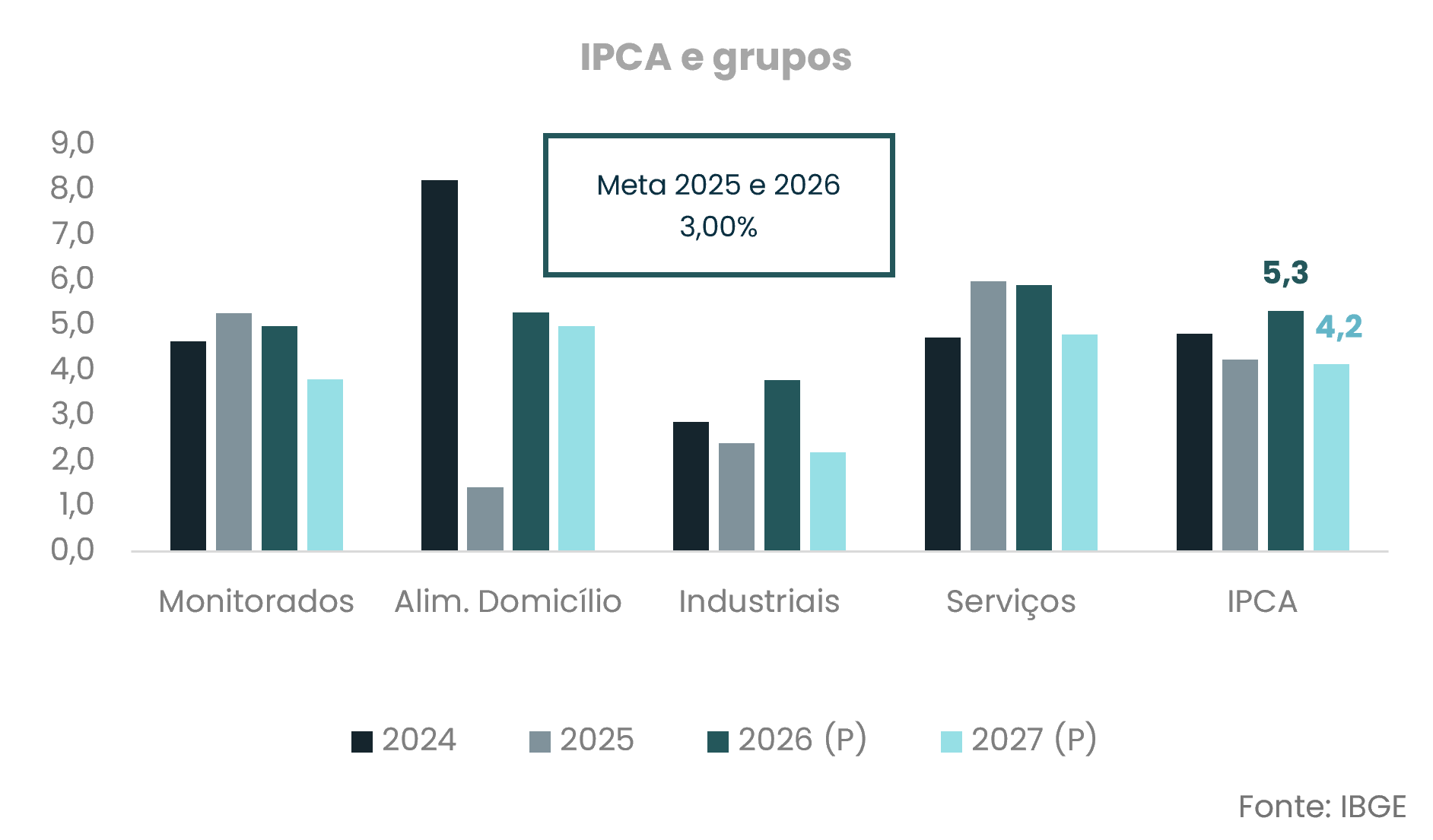
The issue is that some substitutions solve one problem but create another: This same fiscal impulse that supports part of the economic activity also increases inflationary challenges. While fiscal stimulus helps keep economic activity heated, it also hinders the process of bringing inflation down to the Central Bank's target. Inflationary pressures are already significant and widespread across various segments of the economy (see chart). Rising oil prices continue to impact fuel and energy, food prices remain sensitive to climate issues, and the services sector remains pressured by a tight labor market. In this context, stronger domestic demand, driven by government stimulus, could prolong the inflationary process and require a more restrictive monetary policy for a longer period. Furthermore, the expansion of public spending also raises concerns regarding the fiscal trajectory and the sustainability of public debt in the coming years.
And what will the coach's next substitution be? Or rather, what happens to interest rates in the middle of this scenario? Given the situation, the expectation is that the Central Bank will maintain a cautious stance. Although there is still room for a gradual reduction in interest rates, this process tends to be slower than previously anticipated. The trajectory of the Selic rate will depend directly on the evolution of inflation, the conduct of fiscal policy, and the international environment. The base case continues to point to a gradual process of monetary easing, but it is conditioned on a more consistent improvement in inflation expectations and progress in fiscal consolidation. That is, provided no player gets a red card during this match called "inflation convergence to target"!
The good news is that the championship is still far from the final whistle. In general, Brazil is moving through 2026 in a relatively favorable position compared to other emerging markets. A robust external sector, resilient economic activity, and the attractiveness of Brazilian assets are positive factors. However, the challenges remain significant. The substitutions made throughout the match helped sustain growth, but they also increased the challenges of controlling inflation and ensuring the sustainability of public accounts. In the coming quarters, the great challenge will be to find the balance between offense and defense: growing without reigniting inflation and strengthening economic activity without compromising fiscal responsibility. After all, just like in a World Cup, it is not enough to play a good first half; you have to manage the entire match well until the final whistle.

A summary of the main events of each day that may influence the exchange rate, all in less than 1 minute.
Listen nowThe Ouribank Group does not offer loans, credit or debit cards, and does not request or take responsibility for payments of bank slips or deposits into current accounts held by beneficiaries other than Ouribank S.A. Banco Múltiplo and Ouribank Group companies.
Be alert to any unusual practices for credit approval, such as advance payments. Be suspicious of emails that do not come from Ouribank, for example: @outlook, @gmail, @hotmail, etc., or messages via WhatsApp, Facebook, Instagram, and Telegram, or calls from third parties.
If you have any questions, please contact us at: 0800-771-4342 or (11) 4081-4444


Ouribank
CNPJ No. 78,632,767/0001-20
Ouribank Building
Av. Paulista, No. 1,728 - overstore, 1st, 2nd, 3rd, 4th, 5th, 7th and 11th floors
Bela Vista Zip Code - 01310-919
São Paulo - SP
Phone: (11) 4081-4444
Hearing Impaired Care:
(11) 3171-3003
P
Tamer Comunicação Empresarial
+ 5511 99602-1317
Gustavo Girotto
gugirotto@tamer.com.br
Ana Carolina Saito ana.saito@tamer.com.br

Social Media