About us

Solutions
Products
Content


Por
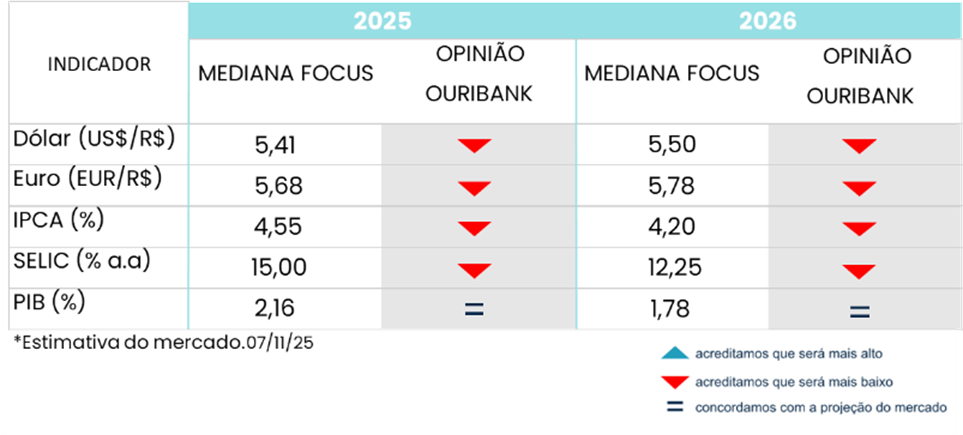
CAUSE: The real has been appreciating against an international backdrop that combines a weaker global dollar with slightly better domestic fundamentals—almost across the board. In the United States, the government shutdown, coupled with renewed uncertainty over the future of interest rates, persistent inflation, and the lack of labor market data, has reduced the appeal of American assets, favoring emerging market currencies. At the same time, China continues to show some resilience, supporting commodity prices and benefiting exporting countries like Brazil. Domestically, the Central Bank has maintained a cautious stance with interest rates remaining high, which widens the interest rate differential compared to other economies and attracts foreign capital inflows—a factor that has strengthened the exchange rate and placed the real among the best-performing currencies this year.
CONSEQUENCE: But what is the short-term impact of all this? The consequences of this currency appreciation are numerous. On one hand, it helps curb inflation, especially for tradable goods, assisting in the downward revision of inflation forecasts, as we have seen recently. On the other hand, the appreciation of the real, combined with high interest rates, could weaken economic activity in the medium term, especially if the fiscal outlook deteriorates again, as is expected in 2026, an election year. This could reverse some of the recent gains, reigniting pressure on prices and interest rates in the future—the president taking office in 2027 had better be prepared! Brazil, therefore, is in a moment of transition—benefiting from a stronger currency and monetary credibility, but still vulnerable to political and fiscal risks.

A summary of the main events of each day that may influence the exchange rate, all in less than 1 minute.
Listen nowThe Ouribank Group does not offer loans, credit or debit cards, and does not request or take responsibility for payments of bank slips or deposits into current accounts held by beneficiaries other than Ouribank S.A. Banco Múltiplo and Ouribank Group companies.
Be alert to any unusual practices for credit approval, such as advance payments. Be suspicious of emails that do not come from Ouribank, for example: @outlook, @gmail, @hotmail, etc., or messages via WhatsApp, Facebook, Instagram, and Telegram, or calls from third parties.
If you have any questions, please contact us at: 0800-771-4342 or (11) 4081-4444


Ouribank
CNPJ No. 78,632,767/0001-20
Ouribank Building
Av. Paulista, No. 1,728 - overstore, 1st, 2nd, 3rd, 4th, 5th, 7th and 11th floors
Bela Vista Zip Code - 01310-919
São Paulo - SP
Phone: (11) 4081-4444
Hearing Impaired Care:
(11) 3171-3003
P
Tamer Comunicação Empresarial
+ 5511 99602-1317
Gustavo Girotto
gugirotto@tamer.com.br
Ana Carolina Saito ana.saito@tamer.com.br

Social Media