About us

Solutions
Products
Content

Por
CAUSE: The World Cup has come to an end, but the tariffs haven't! While the World Cup stirred up fans and captured our attention, another type of game continued on the field: the game of trade tariffs. The 25% tariff imposed by the United States is likely to have a concentrated impact on specific segments of the Brazilian economy, especially those heavily dependent on the American market, such as footwear, furniture, machinery, electrical equipment, and pulp. Even so, it remains controversial and a source of unease. While in soccer it is possible to reorganize the team for the next match, in foreign trade, replacing markets does not always happen overnight. Since a large portion of production in these sectors is custom-made to meet the requirements of US clients, simply searching for new buyers may not be enough in the short term, as it requires adjustments to production structures, product portfolios, and corporate sales strategies.
CONSEQUENCE: So, the games are over, but the economic scoreboard remains highly contested, and it is still too early to say who will be the winner—or, for that matter, if there will be a winner at all. However, it is worth noting that despite the challenges for the directly affected sectors, the impact on the Brazilian economy as a whole should be limited, with no significant changes to GDP growth forecasts or the trade balance, for example. Even so, for the affected companies, the game is likely to be tougher: there may be a reduction in exports, a need to redirect part of production to the domestic market, and increased pressure on prices and margins. In this context, rather than just hoping for a turnaround, it will be essential to advance policies for production and market diversification, protect jobs, and try to maintain at least minimal diplomatic negotiations between Brazil and the United States to prevent these trade barriers from becoming permanent.
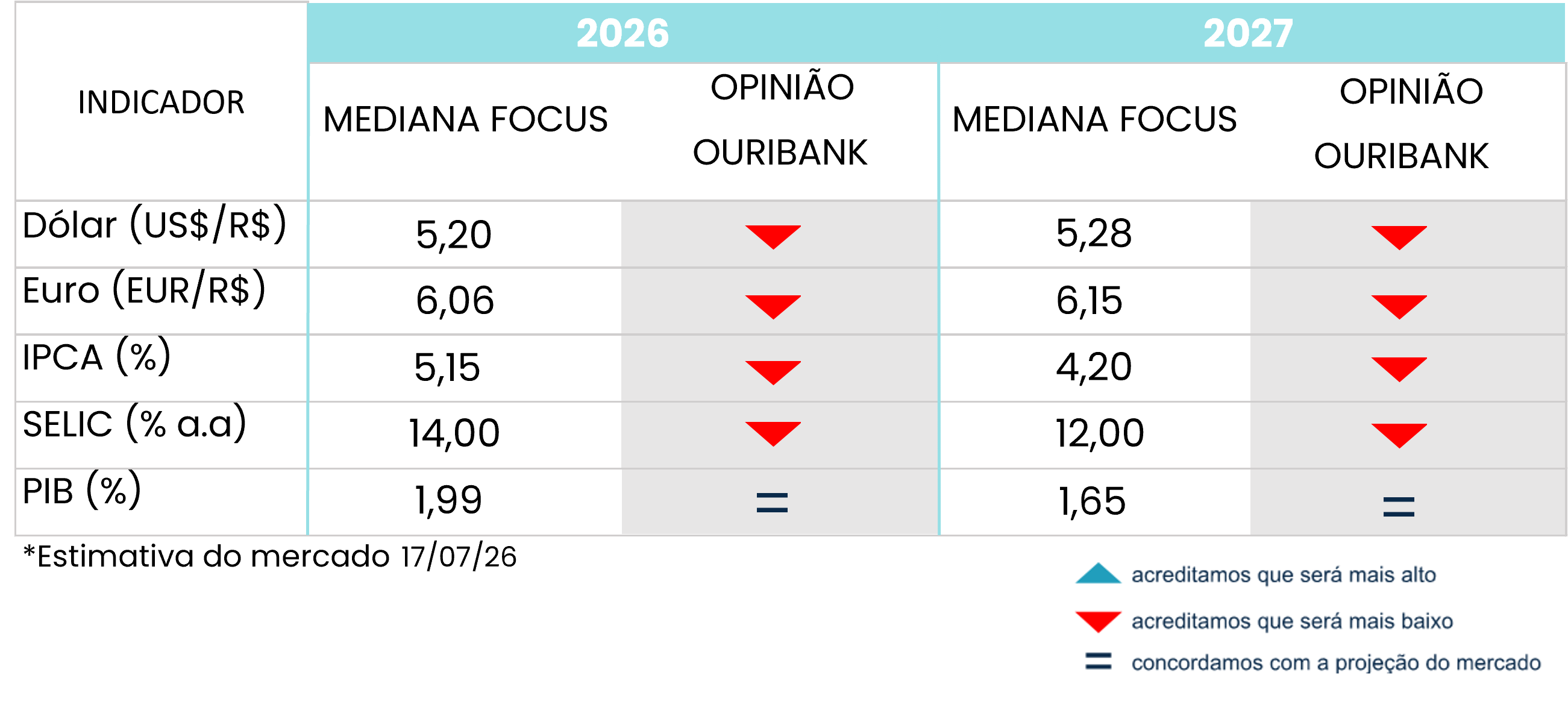

A summary of the main events of each day that may influence the exchange rate, all in less than 1 minute.
Listen nowThe Ouribank Group does not offer loans, credit or debit cards, and does not request or take responsibility for payments of bank slips or deposits into current accounts held by beneficiaries other than Ouribank S.A. Banco Múltiplo and Ouribank Group companies.
Be alert to any unusual practices for credit approval, such as advance payments. Be suspicious of emails that do not come from Ouribank, for example: @outlook, @gmail, @hotmail, etc., or messages via WhatsApp, Facebook, Instagram, and Telegram, or calls from third parties.
If you have any questions, please contact us at: 0800-771-4342 or (11) 4081-4444


Ouribank
CNPJ No. 78,632,767/0001-20 Ouribank Building
Av. Paulista, No. 1,728 - overstore, 1st, 2nd, 3rd, 4th, 5th, 7th and 11th floors
Bela Vista Zip Code - 01310-919
São Paulo - SP
Phone: (11) 4081-4444
Hearing Impaired Care:
(11) 3171-3003
P
Tamer Comunicação Empresarial
+ 5511 99602-1317
Gustavo Girotto
gugirotto@tamer.com.br
Ana Carolina Saito ana.saito@tamer.com.br

Social Media