About us

Solutions
Products
Content


Por
CAUSE: With oil prices undecided due to the uncertainties surrounding the conflict between the US and Iran, we are navigating the economic landscape almost blindfolded. It is difficult to map out any scenario in an environment as volatile as the one we have seen in recent weeks. Some impacts are already more visible and tangible, such as a potential rise in fuel prices, which has already reverberated in official inflation data (see the March IPCA released last week). Even so, it is too early to say whether this trend will continue. Furthermore, there is a local asset that seems to be emerging unscathed from all this external risk aversion—hello, dollar! For how long? We don't know that either.
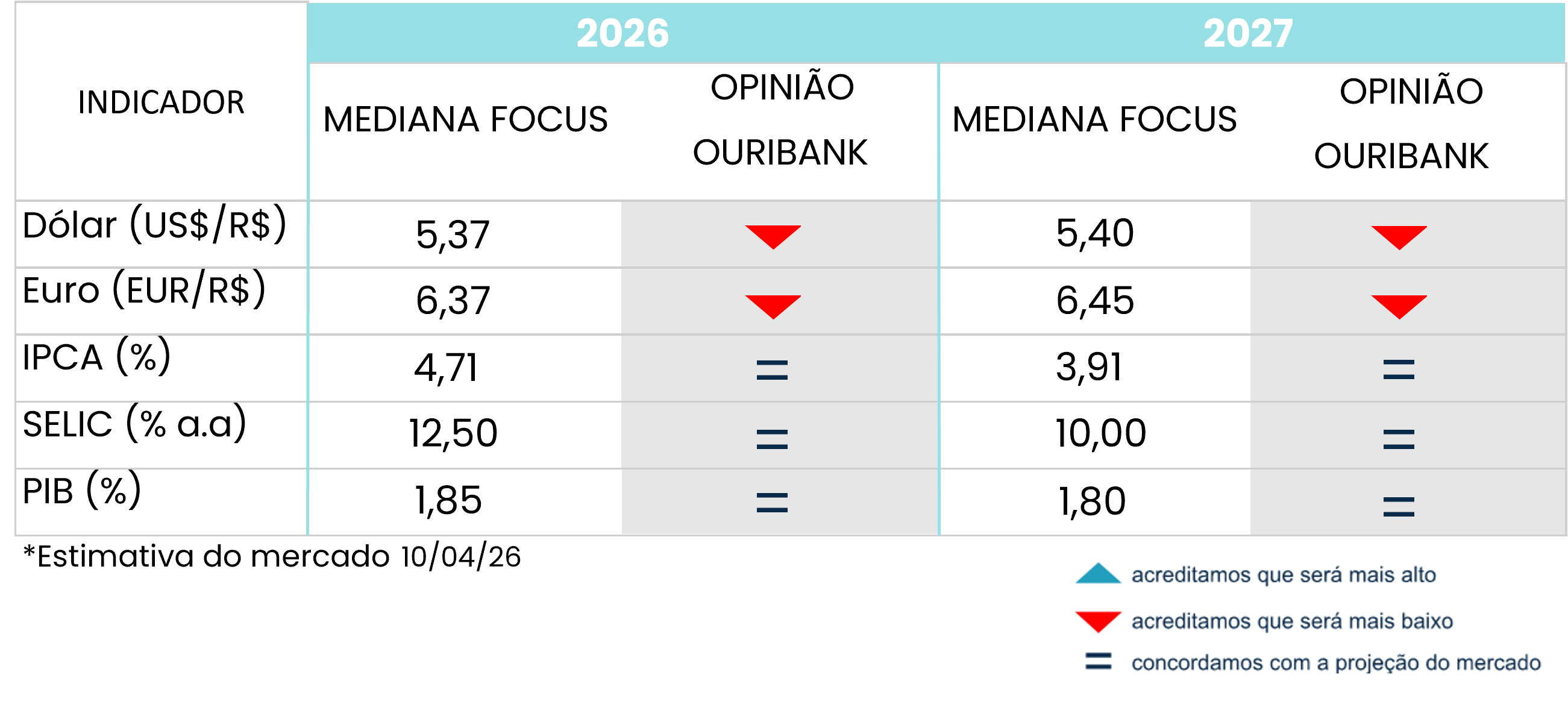
CONSEQUENCE: In an environment like this, the tendency is for increased caution and frequent scenario revisions, both by the market and economic authorities. Oil volatility could end up contaminating future inflation expectations (and it already is!), especially if there are more persistent pass-throughs to fuel prices, which, in turn, could limit the room for interest rate cuts or even require a more conservative stance from the Central Bank. Regarding the exchange rate, even though the real has shown resilience so far, this movement may not be sustainable if the external scenario deteriorates or the conflict intensifies, bringing pressure back onto the currency. Ultimately, the main effect is an environment of greater uncertainty, which complicates investment decisions, reduces predictability, and keeps projections—such as those in the Focus report—more sensitive to any new noise in the global landscape.

A summary of the main events of each day that may influence the exchange rate, all in less than 1 minute.
Listen nowThe Ouribank Group does not offer loans, credit or debit cards, and does not request or take responsibility for payments of bank slips or deposits into current accounts held by beneficiaries other than Ouribank S.A. Banco Múltiplo and Ouribank Group companies.
Be alert to any unusual practices for credit approval, such as advance payments. Be suspicious of emails that do not come from Ouribank, for example: @outlook, @gmail, @hotmail, etc., or messages via WhatsApp, Facebook, Instagram, and Telegram, or calls from third parties.
If you have any questions, please contact us at: 0800-771-4342 or (11) 4081-4444


Ouribank
CNPJ No. 78,632,767/0001-20 Ouribank Building
Av. Paulista, No. 1,728 - overstore, 1st, 2nd, 3rd, 4th, 5th, 7th and 11th floors
Bela Vista Zip Code - 01310-919
São Paulo - SP
Phone: (11) 4081-4444
Hearing Impaired Care:
(11) 3171-3003
P
Tamer Comunicação Empresarial
+ 5511 99602-1317
Gustavo Girotto
gugirotto@tamer.com.br
Ana Carolina Saito ana.saito@tamer.com.br

Social Media